Course overview
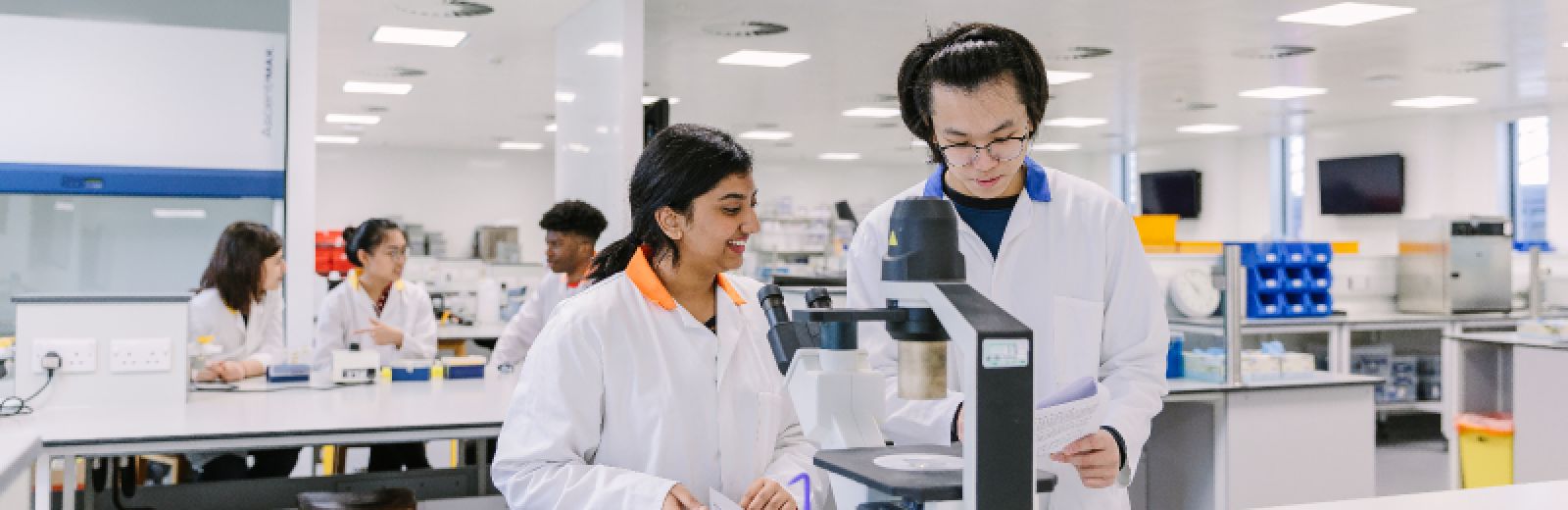
Studying the molecular and cellular aspects of life is at the heart of our Biological Sciences degree. Understanding how cells respond to and influence their environment drives the most exciting discoveries in molecular and cellular biology.
How do mutations cause inherited disorders and cancer? How do viruses replicate within cells? What is the molecular basis of antibiotic resistance? During your degree, you’ll be taught by world-leading researchers at the forefront of tackling global challenges such as cancer, Alzheimer’s disease, ageing, antibiotic resistance and emerging viruses.
Biological Sciences is our most flexible and interdisciplinary degree, which enables you to build a broad knowledge base in your first year, with opportunities to specialise in chosen themes in subsequent years of the course.
This 3-year BSc can also be converted into an integrated Masters (MBiol) with an optional additional year of specialist training, subject to suitable academic performance at the end of your 2nd year and availability. You would study advanced research topics and undertake your own extended research project.
Why study at Leeds
- Study with one of the largest centres for biological sciences research in the UK, with access to cutting- edge facilities, industry links and specialist research opportunities.
- Flexible options to transfer onto other suitable and related degrees at the end of year 1, as many programmes within our School share a common first year.
- Put theory into practice by undertaking fieldwork activities within the UK, Spain and South Africa. You’ll advance your research skills and gain hands-on experience highly valued by employers in industry or in postgraduate education.
Biological science or biology?
Discover the difference between Biological Sciences and Biology.
Accreditation
This course offers the option to apply for a year in industry as part of your course. If you are successful in your application and undertake this work placement, you'll graduate with the BSc Biological Sciences (Industrial) variant, which is accredited by The Royal Society of Biology.
Advanced Degree Accreditation by the Society recognises academic excellence in the biosciences, and highlights degrees that educate the research and development leaders and innovators of the future. The Advanced Accreditation criteria require evidence that graduates from the programme meet defined sets of learning outcomes, including gaining a substantial period of research experience.
This accreditation is also applicable to the following course variants: MBiol BSc Biological Sciences; MBiol BSc Biological Sciences (Industrial); MBiol BSc Biological Sciences (International).
Course details and modules
The list shown below represents typical modules/components studied and may change from time to time. Read more in our terms and conditions.
Most courses consist of compulsory and optional modules. There may be some optional modules omitted below. This is because they are currently being refreshed to make sure students have the best possible experience. Before you enter each year, full details of all modules for that year will be provided.
For more information and a list of typical modules available on this course, please read BSc Biological Sciences in the course catalogue.
Year 1
You will study microbiology, genetics, immunology, biochemistry and cell biology as they relate to biomedicine. You will develop your practical skills with hands-on laboratory sessions, where you will become experienced in data collection and problem-solving. You will strengthen your core theoretical knowledge through lectures and interactive seminar groups. Upon the conclusion of your first year, you will have achieved the key foundations needed for success at degree level.
At the end of year 1, our flexible degree structure offers you the opportunity to transfer to relevant degree courses in the School of Molecular and Cellular Biology. Course transfers are subject to space and academic background approval.
Compulsory modules
Introductory Skills in the Molecular Biosciences (20 credits) -You’ll be trained in data collection and experimental techniques relevant to the biological sciences. You'll learn how to use laboratory equipment, design and execute simple experiments, understand approaches used to study biochemical and molecular processes and analyse and interpret numerical data.
Introductory Skills in Microbiology (20 credits) - You’ll focus on data collection and laboratory techniques relevant to microbial sciences, as well as further developing your skills in problem-solving, teamwork, and communication. You’ll engage with a mix of practical classes, tutorials and computer-based classes, and will learn about aseptic technique, bacterial culture, microscopy, PCR, electrophoresis, and DNA sequencing, applying theoretical knowledge gained from your lecture modules.
The Basis of Life (20 credits) - You’ll learn about the fundamental processes of life, identifying the key concepts that underpin the biological processes in all living organisms, from bacteria to mammals. On completion, you'll have a comprehensive grounding in the molecular basis of life from the atomic scale up to cells.
Introduction to Microbiology (20 credits) - You’ll be introduced to a wide range of microscopic life forms and viruses. You will learn about microbiology in a broad sense and explore the diversity of microbial life with emphasis on how we interact with microbes that are responsible for infections as well as those that do not normally cause disease. You’ll also learn how microorganisms interact with each other and influence more complex organisms, including their impact on human life.
Introduction to Genetics (10 credits) - You’ll explore the different meanings of ‘genetics’ and how this concept has changed over time. More importantly, you will explore what genetics means for us as organisms. To what extent do genes determine our inheritance? How do our genes make us the distinct and unique organisms we are?
Introduction to Immunology (10 credits) - You’ll review fundamental immune mechanisms with particular emphasis on human immunology and its relationship to health and disease. You'll discover how we protect ourselves from infection through our immune defences, learning about the roles played by the different types of leukocytes, antibodies and complement.
Optional modules
20 credits from the following
Short Introduction to Human Body Systems (10 credits) - This module introduces the core concepts underpinning the structure and function of human body systems, with an emphasis on how systems are structured, operate and interact. The idea that the environment, exercise or disease can disturb these systems will be introduced.
The Diversity of Life (10 credits) - You’ll be provided with an overview of the evolution and diversity of life, the key features that define each group and the role of those taxa in ecological processes. Each group of organisms will be linked to a major global challenge including food security, disease, and wildlife conservation, to demonstrate how fundamental science informs important societal issues.
Living Planet (20 credits) - You’ll be provided with an overview of the evolution and diversity of life, the key features that define each group and the role those take in ecological processes. Each group of organisms will be linked to a major global challenge including food security, disease and wildlife conservation, to demonstrate how fundamental science informs important societal issues.
Discovery Modules (Up to 10 credits) - As well as the compulsory and optional modules that make up your programme of study, you may be able to choose something different to your main subject as a Discovery Module.
Year 2
You will build upon your year one core modules, but with a focus on advanced topics such as omics and big data biology and how diseases disrupt cellular structure and function.
Choose to focus your studies in one of three themes over the remaining years of the course:
Infection and Disease – focus on virology and bacteriology to understand current and emerging infections.
Genome Biology and Disease – includes bioinformatics and human genetics and aims to understand the role played by genes in human health.
Molecular Medicine – focuses on the molecular and cellular basis of human diseases, such as cancer.
At the end of year 2, you will have the opportunity to complete an industrial work placement, study abroad, or combined study and work abroad. This will add an additional year of study to your degree.
Compulsory modules (all themes)
Intermediate Skills in the Molecular Biosciences (20 credits) - This module develops core laboratory skills in molecular biosciences through a continuous research project. You’ll design, troubleshoot, and analyse experiments, focusing on gene cloning and protein production. With workshops and practical sessions, you’ll gain expertise in data interpretation, software tools, and scientific communication, providing a strong foundation for carrying out research professionally.
Omics and Big Data Biology (20 credits) - You’ll be introduced to omics-based approaches at the forefront of equipping biologists to overcome global challenges. You’ll also develop practical data-science skills in comparative genomics, transcriptomics and proteomics in order to conduct group-based and individual research projects.
Intermediate Skills in the Biological Sciences (20 credits) - This module builds laboratory and data analysis skills in molecular biosciences. You’ll design experiments, interpret data, and use statistical tools to solve biological problems. Practical classes and tutorials emphasize collaboration, problem-solving, and effective scientific communication, preparing you for research projects and further study in cell biology.
Infection and Disease theme compulsory modules
Medical Microbiology (20 credits) - This module provides a detailed exploration of the microorganisms that cause human disease, focusing on bacteria, viruses, and fungi. You’ll learn about the clinical presentation, diagnosis, prevention, and treatment of infectious diseases, building on foundational microbiology concepts introduced in your first year. The module explores why and how microorganisms cause disease, alongside the strategies used to prevent and treat infections. You’ll develop the skills to interpret case-based scenarios and apply your knowledge to real-world examples.
Medical Immunology (10 credits) - You’ll gain detailed knowledge of the immune system, focusing on human health, from infectious and auto-immune diseases to treatment.
Molecular Virology (10 credits) - You’ll be introduced to techniques used for the study of viruses, the structure of viruses and the processes of their replication and evolution. You’ll also learn about how virus biology can be exploited for gene expression and gene therapy.
Infection and Disease theme optional modules
10 credits of the below in semester 1
Parasitology (10 credits) – This module introduces you to the study of parasites, focusing on those of medical and veterinary importance. You’ll examine parasites such as malaria and toxoplasma, better understanding how they cause disease on a global scale.
Molecular Pharmacology (10 credits) – This module explores how drugs interact with their targets at a molecular level, and how they alter their targets. You'll understand the principles of molecular structure, recombinant DNA technology, and its role in biology and pharmacology.
10 credits of the below in semester 2
The Imprinted Brain (10 credits) - This module is based on Christopher Badcock’s 2009 book, The Imprinted Brain. Badcock suggests that imprinted genes influence our behavioural spectrum between autism and psychosis. Students will use an interdisciplinary approach to explore the genetics, pathology, socio-economic impacts, and cultural differences of these conditions. Offered in collaboration with Utrecht University, it includes distance learning.
Bioinformatics for Biologists (10 credits) - You’ll be introduced to the basics of bioinformatics and the application of bioinformatics to many biological questions. The module shows how genomic data is stored and accessed to learn about any characterised gene or protein and how it links to resources on research. The approaches to modern phylogenetics are introduced and how bioinformatics is applied to drug discovery.
Human Diseases (10 credits) - You will cover a range of human diseases, both inherited and environmentally linked. These include heart and vascular disease, diabetes, neurodegenerative diseases, dermatitis, and diseases linked to diet deficiencies.
‘Genome Biology and Disease’ theme compulsory module
Human Populations and Disease (20 credits) - In this module, you will learn about human populations and their relationships with the environment. Human evolution will be explored, including the underlying principles that lead to genetic differences between individuals and populations. Epidemiological aspects cover the analysis of infectious diseases and cancer. In addition, genetic diseases are investigated in the context of genome organisation, mutation and gene expression, including clinical approaches to diagnosis of cytogenetic abnormalities. This course offers a blend of theoretical knowledge and practical application, preparing you to tackle real-world challenges in the fields of epidemiology and human genetics.
Discovery Modules (Up to 10 credits) - As well as the compulsory and optional modules that make up your programme of study, you may be able to choose something different to your main subject as a Discovery Module.
‘Genome Biology and Disease’ theme optional modules
20 credits of the below in semester 1
Parasitology (10 credits) - This module introduces you to the study of parasites, focusing on those of medical and veterinary importance. You’ll examine parasites such as malaria and toxoplasma, better understanding how they cause disease on a global scale.
Molecular Virology (10 credits) - You’ll be introduced to techniques used for the study of viruses, the structure of viruses and the processes of their replication and evolution. You’ll also learn about how virus biology can be exploited for gene expression and gene therapy.
Discovery Modules (Up to 10 credits) - As well as the compulsory and optional modules that make up your programme of study, you may be able to choose something different to your main subject as a Discovery Module.
20 credits of the below in semester 2
Bioinformatics for Biologists (10 credits) - You’ll be introduced to the basics of bioinformatics and the application of bioinformatics to many biological questions. The module shows how genomic data is stored and accessed to learn about any characterised gene or protein and how it links to resources on research. The approaches to modern phylogenetics are introduced and how bioinformatics is applied to drug discovery.
Medical Immunology (10 credits) - You’ll gain detailed knowledge of the immune system, focusing on human health, from infectious and auto-immune diseases to treatment.
Medical Microbiology (20 credits) - This module provides a detailed exploration of the microorganisms that cause human disease, focusing on bacteria, viruses, and fungi. You’ll learn about the clinical presentation, diagnosis, prevention, and treatment of infectious diseases, building on foundational microbiology concepts introduced in your first year. The module explores why and how microorganisms cause disease, alongside the strategies used to prevent and treat infections. You’ll develop the skills to interpret case-based scenarios and apply your knowledge to real-world examples.
Fundamentals of Cell and Cancer Biology (20 credits) - This module provides an introduction to human cell biology and the molecular basis of cancer. You’ll begin by studying the key structures and processes within a normal cell, exploring how components work together to maintain cellular function. The module then examines how these processes can become disrupted, leading to the development of cancer. Finally, you’ll learn about therapeutic strategies for combating cancer, including the development and action of targeted treatments.
Human diseases (10 credits) - This module explores a range of human diseases, both inherited and environmentally linked, including heart and vascular disease, diabetes, neurodegenerative disorders, dermatitis, and conditions related to dietary deficiencies. You’ll examine the underlying mechanisms, diagnosis, and treatment of these diseases, developing an in-depth understanding of their biological basis and real-world impact.
Molecular Medicine theme compulsory modules
Molecular Pharmacology (10 credits) - This module explores how drugs interact with their targets at a molecular level, and how they alter their targets. You'll understand the principles of molecular structure, recombinant DNA technology, and its role in biology and pharmacology.
Molecular Virology (10 credits) - You’ll be introduced to techniques used for the study of viruses, the structure of viruses and the processes of their replication and evolution. You will also learn about how virus biology can be exploited for gene expression and gene therapy.
Fundamentals of Cell and Cancer Biology (20 credits) - This module provides an introduction to human cell biology and the molecular basis of cancer. You’ll begin by studying the key structures and processes within a normal cell, exploring how components work together to maintain cellular function. The module then examines how these processes can become disrupted, leading to the development of cancer. Finally, you’ll learn about therapeutic strategies for combating cancer, including the development and action of targeted treatments.
Molecular Medicine theme optional modules
20 credits of the below in semester 2
Bioinformatics for Biologists (10 credits) - You’ll be introduced to the basics of bioinformatics and the application of bioinformatics to many biological questions. The module shows how genomic data is stored and accessed to learn about any characterised gene or protein and how it links to resources on research. The approaches to modern phylogenetics are introduced and how bioinformatics is applied to drug discovery.
Medical Immunology (10 credits) - You’ll gain detailed knowledge of the immune system, focusing on human health, from infectious and auto-immune diseases to treatment.
Human Diseases (10 credits) - This module explores a range of human diseases, both inherited and environmentally linked, including heart and vascular disease, diabetes, neurodegenerative disorders, dermatitis, and conditions related to dietary deficiencies. You’ll examine the underlying mechanisms, diagnosis, and treatment of these diseases, developing an in-depth understanding of their biological basis and real-world impact.
Medical Microbiology (20 credits) – This module provides a detailed exploration of the microorganisms that cause human disease, focusing on bacteria, viruses, and fungi. You’ll learn about the clinical presentation, diagnosis, prevention, and treatment of infectious diseases, building on foundational microbiology concepts introduced in your first year. The module explores why and how microorganisms cause disease, alongside the strategies used to prevent and treat infections. You’ll develop the skills to interpret case-based scenarios and apply your knowledge to real-world examples.
Discovery Modules (Up to 10 credits) - As well as the compulsory and optional modules that make up your programme of study, you may be able to choose something different to your main subject as a Discovery Module.
Year 3
You will conduct an independent research project under the supervision of one of our world-class scientists applying all the skills you have developed during your degree. This can be laboratory-based, literature-based, or computer-based. Alongside this, you will select the lecture modules that align with your chosen theme and develop skills in the critical review of microbiology research and in the presentation of scientific findings to scientific and non-specialist audiences.
Compulsory modules (all themes)
Molecular and Cellular Biology Research Project (40 credits) - With guidance from an academic supervisor, you’ll develop a research question and undertake independent research to answer that question. Your outcomes are presented in a report that outlines the context of the research, the approaches taken, conclusions made and future work, including the potential applications of the research findings. This will allow you to develop expertise in a research area and further build your analytical and communication skills.
Advanced Skills in the Biosciences (20 credits) - In the final year skills module, you’ll become familiar with up-to-date developments, hypotheses and controversies in molecular biosciences. You'll develop your problem-solving and scientific communication skills, as well as participate in careers workshops.
Infection and Disease theme compulsory modules
Advanced Topics in Molecular and Cellular Biology (20 credits) - In this module, you’ll go beyond textbook examples and into the world of research. Experts in their field will guide you through current and ongoing research allowing you to see how research is performed whilst also going into key topics from this subject area like you haven’t done before. You’ll tackle key cellular architectures, processes and behaviours from a molecular perspective, placing your scientific knowledge into a wider cellular context, allowing you to understand and manipulate a range of key cellular processes. Topics that have been previously covered include Membranes, How to build an organelle, Disease Models, Signal Transduction in Cancer and Cardiovascular Disease and Stem Cells.
Advanced Topics in Microbiology 1 (20 credits) - In this flagship research-led module, you’ll engage with current research in a range of topics which have previously covered the world of viruses and emerging infections. The module is continuously refreshed with topics that reflect the cutting-edge research at Leeds.
Advanced Topics in Microbiology 2 (20 credits) - In this flagship research-led module, you’ll engage with current research in a range of topics which have previously covered respiratory infection and human-microbe interactions. The module is continuously refreshed with topics that reflect the cutting-edge research at Leeds.
Genome Biology and Disease theme compulsory modules
Reproductive Medical Science (20 credits) - This module provides a broad overview of the past, present and future of research-led intervention in human reproduction. It covers basic reproductive biology, the causes of infertility and technologies such as in vitro fertilisation, along with the ethical challenges that reproductive technologies present.
Advanced Topics in Human Genetics and Epigenetics (20 credits) - You will gain a comprehensive insight into human genetics with an emphasis on disease. Specific topics discussed include telomere biology, epigenetics, DNA damage/repair, DNA recombination and genome integrity/stability.
Genome Biology and Disease theme optional modules
20 credits of the below in Semester 2
Cancer Biology (20 credits) - You’ll gain a comprehensive knowledge of a range of human cancers, from the molecular basis of cancer to the alterations in cells and tissues in cancers to current therapies.
Advanced Topics in Microbiology 2 (20 credits) - In this flagship research-led module, you’ll engage with current research in a range of topics which have previously covered respiratory infection and human-microbe interactions. The module is continuously refreshed with topics that reflect the cutting-edge research at Leeds.
Molecular Medicine theme compulsory modules
Advanced Topics in Molecular and Cellular Biology (20 credits) - In this module, you’ll go beyond textbook examples and into the world of research. Experts in their field will guide you through current and ongoing research allowing you to see how research is performed whilst also going into key topics from this subject area like you haven’t done before. You’ll tackle key cellular architectures, processes and behaviours from a molecular perspective, placing your scientific knowledge into a wider cellular context, allowing you to understand and manipulate a range of key cellular processes. Topics that have been previously covered include Membranes, How to build an organelle, Disease Models, Signal Transduction in Cancer and Cardiovascular Disease and Stem Cells.
Advanced Topics in Microbiology 2 (20 credits) - In this flagship research-led module, you’ll engage with current research in a range of topics which have previously covered respiratory infection and human-microbe interactions. The module is continuously refreshed with topics that reflect the cutting-edge research at Leeds.
Cancer Biology (20 credits) – You’ll gain a comprehensive knowledge of a range of human cancers, from the molecular basis of cancer to the alterations in cells and tissues in cancers to current therapies.
Learning and teaching
Our teaching is delivered through a combination of lectures, tutorials and practicals (laboratory or field settings dependent on your degree). We take a student-centred approach to learning and so our teaching is designed to enable student engagement through active learning approaches that include creative problem-solving, teamwork activities and mini-projects. In this way, you can apply the theoretical knowledge learnt to practical, real-life contexts. We put a high value on practical teaching, so a core part of your teaching will focus on developing hands-on practical and associated research skills.
Independent study is an important part of University learning and you will be expected to undertake private study. We will support you in becoming independent learners through our teaching approaches and through regular meetings with your personal tutor who is there to advise you academically.
We use a range of digital tools to enhance your learning. Through our Minerva learning management system, you will be able to access our extensive library of online materials, some of it designed specifically to support preparation prior to attending classroom sessions and discuss content with peers and teachers. In the classroom, educators use a variety of interactive digital tools to help you learn through discussion and debate. Laboratory practicals are accompanied by detailed online preparation guides and use of electronic laboratory notebooks to ensure you get the most out of your time and develop workplace skills.
On this course, you’ll be taught by our expert academics, from lecturers through to professors. You may also be taught by industry professionals with years of experience, as well as trained postgraduate researchers, connecting you to some of the brightest minds on campus.
Assessment
We use a variety of assessment methods to help you develop a broad range of skills. These include practical work, data handling and problem-solving exercises, multiple-choice tests, group work, online and face-to-face discussion groups, computer-based simulations, essays, posters and oral presentations. We support students in their assessment journey through the provision of practice questions, sessions on how to complete assessment questions and feedback to support learning.
Facilities
The School of Molecular and Cellular Biology is an international research hub with outstanding facilities for structural biology, biophysics, cell biology and imaging. This is underpinned by a recent £17 million investment by the University and a large grant portfolio from major external funders (the Wellcome Trust, Royal Society, BBSRC and MRC). These facilities underpin our research-led teaching and allow us to offer final year projects at the frontier of modern research. Recently refurbished teaching labs and dedicated computer clusters will allow you to develop your practical and computational skills during the first two years of your course. The Faculty Student Opportunity Team provide expert support for preparing applications for placements, internships and jobs.
Wellbeing and support
The University of Leeds features an extensive network of excellent services dedicated to you and your wellbeing. We are here to help throughout your time in higher education, ensuring you have everything you need to succeed. For more information on the different facets of support you will have access to, please see our Wellbeing and Support page.
Entry requirements
A-level: AAB
Including biology or chemistry and another science or science-related subject. Critical thinking and general studies excluded.
We accept the following:
Science: biology, human biology, chemistry, mathematics and physics.
Science-related: computing, environmental science, food science, geography, geology, PE, psychology and statistics.
Applicants taking a Science A-level (in England) will be required to achieve a pass in the practical element in addition to the standard A-level grade requirement.
When an applicant is taking any of the following:
Extended Project Qualification (EPQ)
Cambridge International Project Qualification (Cambridge IPQ)
Core Maths (if A-level Maths or Further Maths isn't studied as a full A-level)
AS Maths (if A-level Maths or Further Maths isn't studied as a full A-level)
Welsh Baccalaureate Advanced Skills Challenge Certificate
It will be considered alongside A-levels and may attract an alternative offer in addition to the standard offer. If you are taking A-levels, this would be a 1 grade drop from the standard offer. For example an A in one of the above qualifications with ABB at A-level.
GCSE: Grade 6 (B) or above at GCSE maths and Grade 4 (C) or above at GCSE English. The Faculty of Biological Sciences will accept Level 2 Functional Skills as equivalent to C/4 in GCSE English.
Alternative qualifications
Access to HE Diploma
Pass 60 credits overall with 45 credits at Level 3, graded at D39M6P0 including distinctions in biology and mathematics or chemistry. Accept Access courses in Applied Science and Science. Will also consider (depending on subject content):
We accept Access courses in Applied Science. We will also consider (depending on subject content:)
biochemical sciences
biological and environmental science
biological and health science
biological sciences
biosciences
combined sciences
environmental science
life and biological science
life science
medical and health science professions
natural sciences
physical & natural sciences.
BTEC
BTEC Extended Diploma entry requirements: DDM plus A/B in A-level Biology or Chemistry. The preferred BTEC qualification subject is Applied Science (other subjects may be accepted).
BTEC diploma entry requirements: DD plus A/B in A-level Biology or Chemistry. The preferred BTEC qualification subject is Applied Science (other subjects may be accepted).
Applicants with BTEC Extended Certificate/Subsidiary Diploma qualifications must normally have at least 2 A-levels and at least one of these should be Biology or Chemistry (plus another science or science-related subject depending on the BTEC subject).
Cambridge Pre-U
BSc: D3/D3/M1 including D3 in biology or chemistry plus one other science or science-related subject. Global Perspectives excluded.
When an applicant is taking Global Perspectives this can be considered alongside Pre-U subjects and may attract an alternative offer in addition to the standard offer. This would be D3/M1/M1 and grade D3 in Global Perspectives.
International Baccalaureate
31 overall with 6,6,5 at higher level including Biology or Chemistry and another science or science-related subject.
Irish Leaving Certificate (Higher Level)
H2,H2,H2,H2,H3,H3 including H2 in biology or chemistry and another science or science-related subject at higher level.
Scottish Highers / Advanced Highers
Advanced Higher: 5 x Highers AABBB, with AB in 2 Advanced Highers including biology or chemistry and another science or science-related subject. Critical thinking and general studies excluded.
We accept the following:
Science subjects: biology, human biology, chemistry, mathematics, physics.
Science-related subjects: PE, geography, use of mathematics, psychology, statistics, geology and computing.
Scottish Higher: Scottish Highers not accepted on their own
Read more about UK and Republic of Ireland accepted qualifications or contact the School’s Undergraduate Admissions Team.
Alternative entry
We’re committed to identifying the best possible applicants, regardless of personal circumstances or background.
Access to Leeds is a contextual admissions scheme which accepts applications from individuals who might be from low income households, in the first generation of their immediate family to apply to higher education, or have had their studies disrupted.
If you live in a neighbourhood where there is low participation in higher education, we may be able to give priority to your application.
Find out more about Access to Leeds and contextual admissions.
Typical Access to Leeds offer
Specific A Level subjects required – see entry requirement section above.
GCSE: Grade 6 (B) or above at GCSE Maths and Grade 4 (C) or above at GCSE English.
Access to Leeds: Pass
International foundation year
International students who do not meet the academic requirements for undergraduate study may be able to study the University of Leeds International Foundation Year. This gives you the opportunity to study on campus, be taught by University of Leeds academics and progress onto a wide range of Leeds undergraduate courses. Find out more about International Foundation Year programmes.
English language requirements
IELTS 6.0 overall, with no less than 5.5 in any component.. For other English qualifications, read English language equivalent qualifications.
Improve your English
If you're an international student and you don't meet the English language requirements for this programme, you may be able to study our undergraduate pre-sessional English course, to help improve your English language level.
Fees
UK: £10,050
International: £33,800 (per year)
The amount of tuition fees you pay is based on whether you are classified as a home (UK) or international student. Find out how we assess your fee status.
Tuition fees for UK students
Tuition fees for UK undergraduate students starting in 2027/28 are £10,050.
Subsequent years
The UK government sets the maximum tuition fee caps that universities can charge UK students. This means your tuition fee in future academic years will reflect any changes set by the government.
From 2028/29 onwards, tuition fees are likely to increase annually, at least in line with inflation, and may rise further if the government increases the fee cap.
Tuition fees for international students
The international fee applies for each year of full-time study and will remain the same for the duration of your course.
Read more about tuition fees.
Tuition fees for a study abroad or work placement year
If you take a study abroad or work placement year, you’ll pay a reduced tuition fee during this period. For more information, see Study abroad and work placement years on our tuition fees page.
Additional cost information
There may be additional costs related to your course or programme of study, or related to being a student at the University of Leeds. Read more on our living costs and budgeting page.
Applying
Apply to this course through UCAS. Check the deadline for applications on the UCAS website.
We welcome applications from mature students. We welcome applications from mature students from all backgrounds onto both full-time and part-time programmes.
International students apply through UCAS in the same way as UK students. Our network of international representatives can help you with your application. If you’re unsure about the application process, contact the admissions team for help.
Read about visas, immigration and other information in International students. We recommend that international students apply as early as possible to ensure that they have time to apply for their visa.
Admissions guidance
Visit our admissions guidance page for more information about applying to undergraduate courses in the Faculty of Biological Sciences.
Application process
The Faculty of Biological Sciences may consider applications submitted after this date. Availability of courses in UCAS Extra will be detailed by UCAS at the appropriate stage in the cycle.
Alternative Entry Scheme for mature applicants
The Faculty of Biological Sciences will consider prospective students via the Alternative Entry Scheme run by the Lifelong Learning Centre. Where appropriate applicants will be referred to the Lifelong Learning Centre, who will advise the applicant further.
Admissions policy
University of Leeds Admissions Policy 2027
This course is taught by
Faculty of Biological Sciences
Contact us
Faculty of Biological Sciences Undergraduate Admissions Office
Email: fbsadmissions@leeds.ac.uk
Career opportunities
As well as providing you with subject-specific knowledge, we aim to equip you with the best possible skills for a variety of future careers. All of our degrees have a strong emphasis on practical-based teaching, small group teaching, online learning and problem solving.
Throughout the degree, you’ll gain a wide range of transferable skills which are highly valued by employers. Supported by the Faculty Student Opportunity Team, Leeds for Life scheme and your academic and personal tutor, you’ll be ideally placed to focus on your personal development and make the most of your time at university.
Our graduates have, for many years, experienced high employment rates and a significant proportion quickly gain employment upon graduation. With the expansion of biosciences comes the generation of new and varied career opportunities.
Typical graduate careers include:
- Research Scientist at a University
- Research Scientist in industry
- Postgraduate study
- Graduate entry degree in medicine/dentistry
- Science communication
- Teaching
Examples of recent graduate destinations include:
- Research & Development Scientist
- Research Technician
- Junior Account Executive
- Corporate audit
- MSc Physician Associate studies
- PhD Regenerative medicine
- Medicine
Top 10 most targeted for 10+ years
by the UK's leading employers
Careers support
At Leeds, we help you to prepare for your future from day one. We have a wide range of careers resources — including our award-winning Employability Team who are in contact with many employers around the country and advertise placements and jobs. They are also on hand to provide guidance and support, ensuring you are prepared to take your next steps after graduation and get you where you want to be.
- Employability events — we run a full range of events including careers fairs in specialist areas and across broader industries — all with employers who are actively recruiting for roles.
- MyCareer system — on your course and after you graduate, you’ll have access to a dedicated careers portal where you can book appointments with our team, get information on careers and see job vacancies and upcoming events.
- Qualified careers consultants — gain guidance, support and information to help you choose a career path. You’ll have access to 1-2-1 meetings and events to learn how to find employers to target, write your CV and cover letter, research before interviews and brush up on your interview skills.
- Opportunities at Leeds — there are plenty of exciting opportunities offered by our Leeds University Union, including volunteering and over 300 clubs and societies to get involved in.
Study abroad and work placements
Study abroad
On this course you have the opportunity to apply to spend time abroad, usually as an extra academic year. We have over 300 University partners worldwide and popular destinations for our students include Europe, the USA, Canada, Australia, New Zealand, Singapore, Hong Kong, South Africa and Latin America.
Find out more at the Study Abroad website.
If you choose to undertake a study abroad option, you will spend the third year of your course studying abroad. This will extend your studies by 12 months.
This programme gives you the opportunity to undertake an industrial placement year as part of the course.
It’s important to note, work placements are not guaranteed. The job market is competitive – and there may be competition for the placement you want. You’ll have to apply the same way you would for any job post, with your CV and, if successful, attend an interview with the organisation.
Our Employability Team will help you every step of the way. They run a number of placement sessions to discuss opportunities and support you with CV writing and interview preparations. Plus, they’ll be there to answer any questions you may have and offer guidance throughout the process, too.
- Benefits of a work placement year:
- 100+ organisations to choose from, both in the UK and overseas
- Build industry contacts within your chosen field
- Our close industry links mean you’ll be in direct contact with potential employers
- Advance your experience and skills by putting the course teachings into practice
- Gain invaluable insight into working as a professional in this industry
- Improve your employability
Find out more about Industrial placements.
Combined study and working abroad
Our new module allows you to combine both a study abroad and industrial work placement into one additional year of study. Over the year you will study for a semester at one of our partner universities and complete an industrial work placement for 6 months abroad or in the UK.
Find out more about Combined study and work abroad.