Course overview

Take a tour of our School
Get a taste for life as a student in the School of English as undergraduate student Malgorzata takes you on a tour of the School building as well as some campus highlights.
This course teaches you to read like a writer.
Develop your creativity and sharpen your critical abilities, acquiring valuable skills as both a reader and a writer. You’ll produce creative work across various genres, such as fiction, poetry, and creative non-fiction. You may also choose modules in specialist genres such as travel and journalistic writing or science fiction, fantasy and horror.
You'll learn how writers of the past and the present have used words and literary forms to express their ideas and engage with their times’ social and cultural issues.
You’ll encounter historical and modern texts in English from around the globe, which explore themes relevant to how we live today, including race and ethnicity, gender, climate change and nature, social class, disability and wellbeing.
Learn how to shape language to convey your ideas and experience, craft your writing with other students, and build an individual portfolio of work that will set you on track for a creative or cultural industries career.
Our expertise
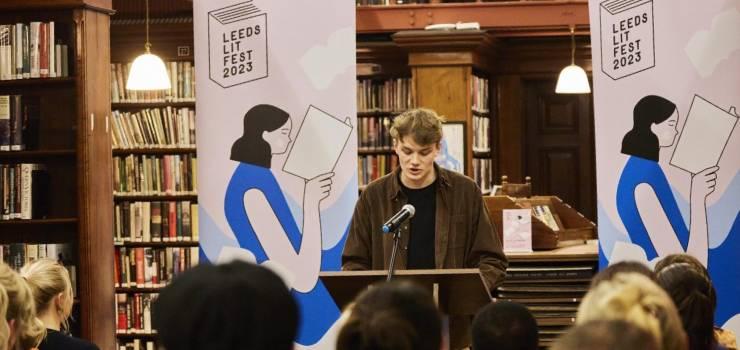
The School of English has a long and prestigious history in creative writing. Current staff include the Poet Laureate, Simon Armitage, Kimberly Campanello, J.R. Carpenter, Zaffar Kunnial, Sarah K. Perry, Jay Prosser, Jess Richards, Ross Raisin, Caitlin Stobie, and John Whale. Former members of the School include the Nobel laureate Wole Soyinka, Malika Booker, Anthony Vahni Capildeo, Hannah Copley, Geoffrey Hill, Helen Mort, Ngugi wa Thong’o, and J.R.R. Tolkien. Our practices and passions run across creative and critical writing and include visual and experimental poetry, eco-poetics, contemporary short-fiction and the novel, literature and medicine, disability studies, digital writing, performance writing, autofiction, and memoir.
We are home to Poetry@Leeds, a dynamic centre that brings together the University’s strength and heritage in creative writing. It hosts regular poetry readings by visiting international poets, supports local writers, and runs a poetry reading group.
At Leeds, you will access to a vibrant community of creative practitioners and researchers. There are regular readings and talks by well-known and emerging writers, regular workshops, and all kinds of other events. We publish Stand, a longstanding and highly regarded literary magazine, and support a number of student publications.
We have partnerships with Literature Festivals in Ilkley, Ledbury, and Bradford (the UK City of Culture in 2025) and collaborate with local institutions such as the Leeds Playhouse and Leeds Grand Theatre.
Specialist facilities
The University of Leeds is a partner of the National Poetry Centre, the national home for poetry, performance, learning and literacy based in Leeds.
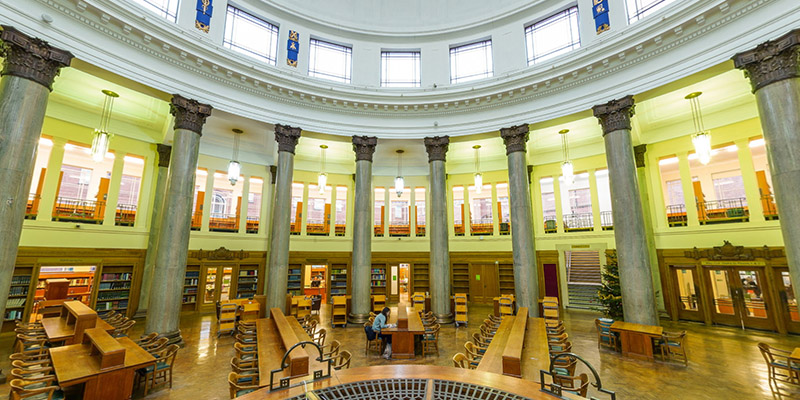
Our world-class Brotherton Library holds internationally significant books, manuscripts and archives from the 17th century to the present day. Collections include a Shakespeare First Folio, letters and manuscripts from writers such as Charlotte Brontë, Oscar Wilde and Bram Stoker, as well as more recent archives from Tony Harrison, Simon Armitage and Peepal Tree Press, among many others. We continue to add to our holdings to reflect a broad spectrum of literary creativity, with a particular focus on writers associated with the University and the wider region. The University Library also offers a comprehensive training programme that will enable you to make the most of our extensive library resources.
The School of English has its own print studio, allowing you to learn traditional typesetting and printing techniques and print your own works.
Take a look around our libraries:
Course details and modules
English Literature with Creative writing will strengthen your writing skills across various genres, providing a rich programme of modules in creative writing, literary studies, and related options.
Year 1
At Level 1, you will take Reading Between the Lines and Literature, Culture, Critique, introducing you to university-level study by equipping you to read critically and write with rigour and persuasion, while Writing Creatively focuses on craft techniques increative writing. Alongside these, you will have a choice of optional modules focusing on poetry, fiction, drama, performance and further creative writing.
Year 2
At Level 2, in addition to two creative writing core modules, Developing Creative Writing in Prose and Developing Creative Writing in Poetry, you will take one or both English Literature core modules, Writing Environments and/or Body Language. These modules explore two urgent contemporary challenges, the climate crisis and personal wellbeing, and will examine how these issues can be understood and expressed through literary texts. You will also select further modules from a choice of several options, ranging historically and geographically from Medieval to Contemporary, and from Postcolonial to American.
Year 3
Level 2 will enrich subject knowledge and intellectual skills and develop your creative practice. At Level 3 you will undertake more independent learning. You will take the Creative Writing Project, which builds on earlier Creative Writing modules, allows you to define, plan, and produce creative work on a subject of your choosing. You will also choose from a range of specialist research modules taught by award-winning writers and leading researchers, such as short story writing, writing for performance, and the practice of artist residencies. We also offer a module that focuses on the literary industries, and offers students the chance to take on an in-house “internship” editing, publishing and launching a creative writing magazine.
After your second year of study, you may apply for transfer to an International Degree at one of the many universities around the world with which the University of Leeds has established links. You may also spend a year in industry on a work placement as an optional third year of your degree programme.
Course structure
The list shown below represents typical modules/components studied and may change from time to time. Read more in our terms and conditions.
Year 1 compulsory modules
Writing Creatively (20 credits) - In this module you will develop your creative writing skills by focusing on a range of elements of the writer’s craft. You will learn to read texts like a writer, and, through examining a range of exemplary published texts, will study elements of the writer’s craft such as voice, metaphor and characterisation. You will develop your critical skills by developing your written pieces with your peers and tutor. Within the supportive environment of the writing workshop, you will learn to give and receive constructive criticism, and, guided by this feedback, hone your redrafting and editing skills. By the end of the module, you will begin to see how your work fits within contemporary writing practice.
Reading Between the Lines (20 credits) - This module equips students with a critical vocabulary for sophisticated literary study. Through close analysis of texts from a range of periods, the module introduces the creative, argumentative, and exciting discipline of ‘English Studies’. Students will encounter some of the theories that have shaped the discipline, and in turn, will discover how an English degree might change how they read the world. Guided critical reading, collaboration with peers in group presentations and seminars, and a variety of assignments will introduce students to the different kinds of assessment required later in the degree.
Literature, Culture and Critique (20 credits) - This module explores how literary analysis can help us read the world around us. It encourages students to think about concepts of ‘literature’ and ‘literariness’ and develop a reflective relationship both to their studies and the wider sphere of culture. Engaging with questions of attention, authenticity and the impact of technology on knowledge and the world, the module prepares students for the next stage of their degree, as well as attuning them to a rapidly evolving society, helping them develop essential skills in critical thinking and nuanced communication.
Year 1 optional modules
Selection of typical options shown below:
- Drama: Text and Performance (20 credits)
- Modern Fictions in English: Conflict, Liminality, Translation (20 credits)
- Poetry: Reading and Interpretation (20 credits)
- Race, Writing and Decolonization (20 credits)
Year 2 compulsory modules
Students may select one or both of the following options:
Writing Environments: Literature, Nature, Culture (20 credits) - This module examines what it means to live as human beings on a more-than-human planet. We’ll investigate how literary texts from different times and places have understood the relationship between nature and culture. We’ll address human impacts on the environment in relation to historical phenomena such as colonialism. And we’ll explore the insights that literature can offer at a time of concern about climate change and other environmental issues
Body Language: Literature and Embodiment (20 credits) - At the heart of this module are big questions such as: what does it mean to be ‘human’? Does technology change who we are? What are the links between the body and the mind? Tackling the relationships between embodiment, language, and representation in texts from different periods and in different forms and genres, the module examines how writers have imagined the relationship between material bodies and literary representation.
Students take the following compulsory modules:
Developing Creative Writing in Prose (20 credits) - At its centre, this module asks, who are you as a prose writer, and what do you want to write? Over the course of the term, you'll work on a prose project in fiction or creative non-fiction. You'll choose your genre, themes, and key concerns, and work with your tutor to build a reading list that constellates your project within the contemporary literary landscape. Three-hour weekly seminars will incorporate carefully selected class readings and writing activities. These will build your skills in literary craft and creative practice. In this time, you will also take part in tutor-guided peer workshops to refine your critique and editing skills, and develop your work-in-progress.
Developing Creative Writing in Poetry (20 credits) - This module asks who you are as a poet, and works to develop your sense of yourself as a creative practitioner, helping you look towards the final year Creative Writing Project. Over the course of the term, you'll work on a poetic project in a form and style of your choosing. Hour-long weekly seminars will develop those projects -as well as your personal reading lists - through tutor-guided peer workshops. You will also attend weekly two-hour long interactive lectures in which poets will share carefully selected readings and creative writing activities. These will focus on a specific element of craft, shedding light on their own creative practice, and encouraging you to think of yourself as creative practitioners with special interests and creative concerns.
Year 2 optional modules
Selection of typical options shown below:
- Contemporary Literature (20 credits)
- Renaissance Literature (20 credits)
- Life, Love and Death from Chaucer to Marlowe (20 credits)
- Cursing and Courtesy: politeness in the history of English (20 credits)
- Modern Literature (20 credits)
- Postcolonial Literature (20 credits)
- The World Before Us: Literature 1660-1830 (20 credits)
- Other Voices: Rethinking Nineteenth-Century Literature (20 credits)
- Script Writing (20 credits)
- Travel and Journalistic Writing (20 credits)
- Power of Language (20 credits)
- Theatre, Society and Self (20 credits)
- Writing for Children and Young Adults (20 credits)
Year 3 compulsory modules
Creative Writing Project (40 credits) - This module encourages independent, self-directed learning, and provides the culmination to the research strand emphasised in other modules. Working with their supervisor and supported by a programme of lectures and workshops, students pursue their own intellectual interests by designing, defining and creating their own capstone project. Since this might take any of a number of forms, it fosters a wide variety of responses to the challenges it offers students. Most importantly, it promotes academic creativity by allowing students the space to explore their own intellectual passions.
Students also choose from a list of creative writing specialist options (20 credits), focussing on topics and led by practitioners who are award-winning leaders in their field. These may include short fiction writing, performance writing, publishing, and the practice of artistic residencies. We also offer a module that focuses on the literary industries, and offers students the chance to take on an in-house “internship” editing, publishing and launching a creative writing magazine.
Year 3 optional modules
Each year we offer a selection of optional modules at Level 3, which arise from the research expertise of staff across the School of English. . Some typical examples are shown below:
- Bowie, Reading, Writing (20 credits)
- Crime Fiction Stylistics: Crossing Languages, Culture, Media (20 credits)
- Digital Discourse: language, social media, AI (20 credits)
- Fictions of the End: Apocalypse and After (20 credits)
- Global African Writing (20 credits)
- Home Bodies: Companion Animals in Contemporary Literature (20 credits)
- Language of the Media (20 credits)
- Postcolonial London (20 credits)
- Refugee Narratives (20 credits)
- Sex and Suffering in the Eighteenth-Century Novel (20 credits)
- Shakespeare and Global Cinema (20 credits)
- Telling Lives: Reading and Writing Family Memoir (20 credits)
Learning and teaching
We use various teaching and learning methods to help you benefit from our tutors' experience and expertise as writers and scholars.
You'll encounter:
Creative writing workshops
Guest masterclasses
Lectures
Seminars
One-to-one supervisions
Group work
Online learning through Minerva, our Virtual Learning Environment.
Our globally recognised research feeds directly into your course and shapes what you learn at Leeds with the latest thinking. You’ll be taught by inspirational academics who are experts in their field and share your passion for your subject. Many are also well-known as creative writers in their own right and so bring their professional experience – and contacts – into the classroom.
Independent study is a vital element of this course since it enables you to develop your research and critical skills and form your ideas. You’ll have access to the unique and internationally important holdings of the Brotherton Library’s Special Collections, to take inspiration from and see first-hand how some of the top writers of this and previous ages went about crafting their writing.
On this course, you’ll be taught by our expert academics, from lecturers through to professors. You may also be taught by industry professionals with years of experience, as well as trained postgraduate researchers, connecting you to some of the brightest minds on campus.
Assessment
In your Creative Writing modules, you’ll produce a creative portfolio in various genres, such as life writing, fiction, poetry, short fiction, and travel accounts.
Some modules will also include wikis, podcasts, research exercises or oral presentations.
Your final year project comprises a long independent creative piece and a critical reflection. English modules are assessed using various methods, including exams, essays and shorter written assignments.
Entry requirements
A-level: AAA including English (Language, Literature or Language and Literature).
Other course specific tests:
Where an applicant is taking the EPQ in a relevant subject this might be considered alongside other Level 3 qualifications and may attract an alternative offer in addition to the standard offer. If you are taking A Levels, this would be AAB at A Level including A in English (Language, Literature or Language and Literature) and grade A in the EPQ.
Alternative qualifications
Access to HE Diploma
Pass diploma with 60 credits overall, including at least 45 credits at level 3, of which 30 credits must be at Distinction and 15 credits at Merit or higher. The Access course must follow a Humanities pathway and include English modules. An interview and a piece of written work may be required.
BTEC
We will consider the level 3 QCF BTEC at Subsidiary Diploma level and above in combination with other qualifications. Please contact the Admissions Office for more information.
Cambridge Pre-U
D3, D3, M2 including D3 in English.
International Baccalaureate
35 points overall with 17 at Higher Level including 6 in English at Higher Level.
Irish Leaving Certificate (Higher Level)
H2, H2, H2, H2, H2, H2 including English.
Scottish Highers / Advanced Highers
AA in Advanced Higher including English and AABBB in Highers or A in Advanced Highers English and AAABB in Highers.
Welsh Baccalaureate
WJEC Level 3 Advanced Skills Baccalaureate Wales
The WJEC Level 3 Advanced Skills Baccalaureate Wales is accepted in place of a third A-level subject at the same grade.
Other Qualifications
European Baccalaureate: 85% with 8.5 in English.
Read more about UK and Republic of Ireland accepted qualifications or contact the School’s Undergraduate Admissions Team.
Alternative entry
We’re committed to identifying the best possible applicants, regardless of personal circumstances or background.
Access to Leeds is a contextual admissions scheme which accepts applications from individuals who might be from low income households, in the first generation of their immediate family to apply to higher education, or have had their studies disrupted.
If you live in a neighbourhood where there is low participation in higher education, we may be able to give priority to your application.
Find out more about Access to Leeds and contextual admissions.
Typical Access to Leeds offer: ABB including an A in English (Language, Literature or Language and Literature) at A Level and pass Access to Leeds.
Arts and Humanities with Foundation Year
This course is designed for students whose backgrounds mean they are less likely to attend university (also known as widening participation backgrounds) and who do not currently meet admissions criteria for direct entry to a degree.
The course will give you the opportunity to be taught by academic staff and provides intensive support to enable your development of academic skills and knowledge. On successful completion of your foundation year, you will progress to your chosen degree course. Find out more about the Arts and Humanities with Foundation Year.
Alternative Entry Scheme for Mature Students
If you are a mature applicant (over 21) and you don’t have the required A Levels or GCSE English and maths qualifications, you can complete our Alternative Entry Scheme (subject to meeting the eligibility criteria for the scheme). As part of this, you may be asked to take tests in English and maths and to write an essay.
Contact the Lifelong Learning Centre for more information.
International
We accept a range of international equivalent qualifications. For more information contact the School of English admissions team.
International foundation year
International students who do not meet the academic requirements for undergraduate study may be able to study the University of Leeds International Foundation Year. This gives you the opportunity to study on campus, be taught by University of Leeds academics and progress onto a wide range of Leeds undergraduate courses. Find out more about International Foundation Year programmes.
English language requirements
IELTS 6.5 overall, with no less than 6.0 in any component. For other English qualifications, read English language equivalent qualifications.
Improve your English
If you're an international student and you don't meet the English language requirements for this programme, you may be able to study our undergraduate pre-sessional English course, to help improve your English language level.
Fees
UK: £10,050
International: £27,300 (per year)
The amount of tuition fees you pay is based on whether you are classified as a home (UK) or international student. Find out how we assess your fee status.
Tuition fees for UK students
Tuition fees for UK undergraduate students starting in 2027/28 are £10,050.
Subsequent years
The UK government sets the maximum tuition fee caps that universities can charge UK students. This means your tuition fee in future academic years will reflect any changes set by the government.
From 2028/29 onwards, tuition fees are likely to increase annually, at least in line with inflation, and may rise further if the government increases the fee cap.
Tuition fees for international students
The international fee applies for each year of full-time study and will remain the same for the duration of your course.
Read more about tuition fees.
Tuition fees for a study abroad or work placement year
If you take a study abroad or work placement year, you’ll pay a reduced tuition fee during this period. For more information, see Study abroad and work placement years on our tuition fees page.
Additional cost information
There may be additional costs related to your course or programme of study, or related to being a student at the University of Leeds. Read more on our living costs and budgeting page.
Scholarships and financial support
If you have the talent and drive, we want you to be able to study with us, whatever your financial circumstances. There is help for students in the form of loans and non-repayable grants from the University and from the government. Learn more about undergraduate funding.
Scholarships are also available to help fund your degree. Find out more and check your eligibility below:
Applying
Apply to this course through UCAS. Check the deadline for applications on the UCAS website.
Read our guidance about applying.
International students apply through UCAS in the same way as UK students. Our network of international representatives can help you with your application. If you’re unsure about the application process, contact the admissions team for help.
Read about visas, immigration and other information in International students. We recommend that international students apply as early as possible to ensure that they have time to apply for their visa.
Admissions policy
University of Leeds Admissions Policy 2027
This course is taught by
Contact us
School of English Undergraduate Admissions
Email: englishug@leeds.ac.uk
Career opportunities
A degree in English with Creative Writing equips you with a range of valuable skills and attributes. You will have analytical and critical skills that allow you to form your own conclusions, and you’ll be a strong communicator who can present and defend your views effectively. You will develop flexibility in your approach to working, and be able to use digital resources and tools for learning, researching and communicating. Learning in groups with others and reading about human problems and social situations will develop your interpersonal skills and understanding of ethical and cultural complexities. Your skills and experience as a flexible and imaginative writer will open up a range of pathways within the creative industries, and further afield.
Our graduates have gone on to find success in areas such as:
the creative industries
publishing
marketing
media
education
journalism
law
business charity work
civil service
management consultancy and leadership
Many have also progressed to postgraduate study.
Top 10 most targeted for 10+ years
by the UK's leading employers
The Graduate Market 2026, High Fliers Research
Careers support
At Leeds, we help you to prepare for your future from day one. We have a wide range of careers resources — including our award-winning Employability Team who are in contact with many employers around the country and advertise placements and jobs. They are also on hand to provide guidance and support, ensuring you are prepared to take your next steps after graduation and get you where you want to be.
Employability events — we run a full range of events including careers fairs in specialist areas and across broader industries — all with employers who are actively recruiting for roles.
MyCareer system — on your course and after you graduate, you’ll have access to a dedicated careers portal where you can book appointments with our team, get information on careers and see job vacancies and upcoming events.
Qualified careers consultants — gain guidance, support and information to help you choose a career path. You’ll have access to 1-2-1 meetings and events to learn how to find employers to target, write your CV and cover letter, research before interviews and brush up on your interview skills.
Opportunities at Leeds — there are plenty of exciting opportunities offered by our Leeds University Union, including volunteering and over 300 clubs and societies to get involved in.
Study abroad and work placements
Study abroad
On this course you have the opportunity to apply to spend time abroad, usually as an extra academic year. We have over 300 University partners worldwide and popular destinations for our students include Europe, the USA, Canada, Australia, New Zealand, Singapore, Hong Kong, South Africa and Latin America.
Find out more at the Study Abroad website.
Year in Industry
This programme gives you the opportunity to undertake an industrial placement year as part of the course.
It’s important to note, work placements are not guaranteed. The job market is competitive – and there may be competition for the placement you want. You’ll have to apply the same way you would for any job post, with your CV and, if successful, attend an interview with the organisation.
Our Employability Team will help you every step of the way. They run a number of placement sessions to discuss opportunities and support you with CV writing and interview preparations. Plus, they’ll be there to answer any questions you may have and offer guidance throughout the process, too.
Benefits of a work placement year:
100+ organisations to choose from, both in the UK and overseas
Build industry contacts within your chosen field
Our close industry links mean you’ll be in direct contact with potential employers
Advance your experience and skills by putting the course teachings into practice
Gain invaluable insight into working as a professional in this industry
Improve your employability
Find out more about Industrial placements.