Course overview
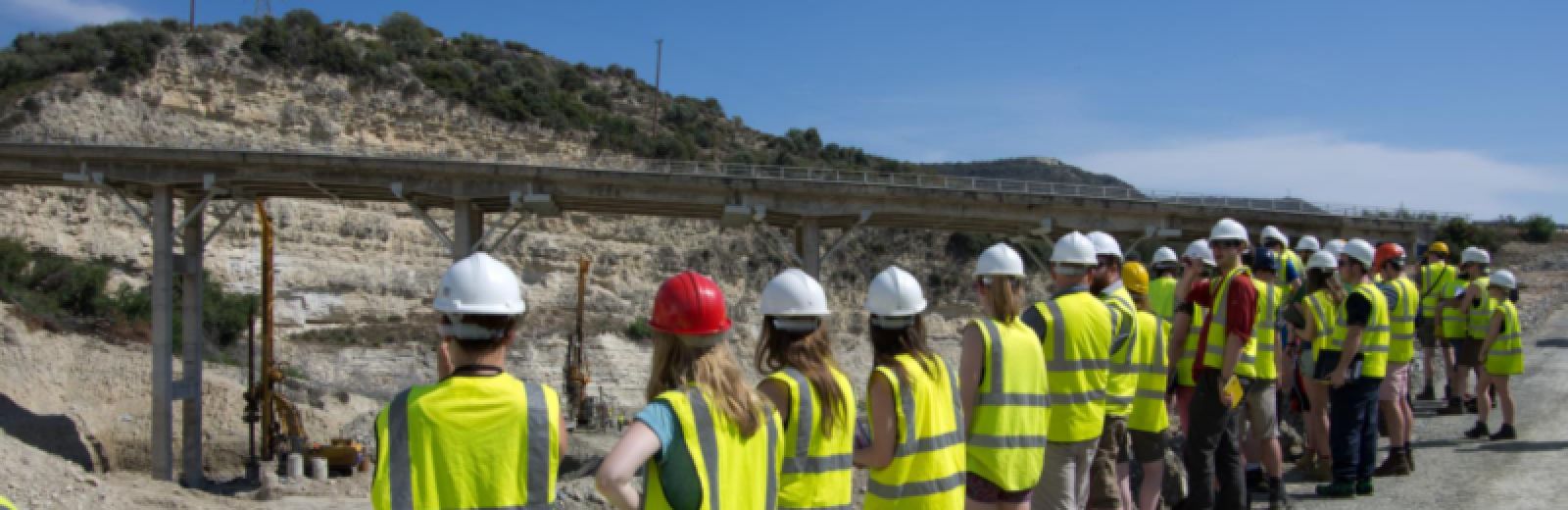
Engineering geologists have a unique understanding of the ground and geological processes, making them crucial to all construction and infrastructure projects. Without their expertise in these processes and the potential hazards, developments risk not being safe, which is why this profession will always be in high demand.
This course provides you with the in-depth knowledge and skills required to embark on a rewarding career in an industry which could take you across the globe, on a wide range of exciting projects, from sustainable infrastructure design to the assessment of environmental and geological risk.
Established over 50 years ago, our Engineering Geology MSc at Leeds has strong links with industrial partners who are actively involved in ensuring course content is up-to-date and industry-relevant.
Engineering geology is the largest employment sector for professional geoscientists, and our graduates have secured positions across the world, working in various sectors within the industry and finding solutions to a wide range of problems.
Why study at Leeds
- Our Masters degree is accredited by The Engineering Council, the Geological Society of London, and the Joint Board of Moderators.
- Our globally-renowned research conducted here in our School of Earth and Environment and in the School of Civil Engineering feeds directly into the MSc course, shaping your learning with the latest thinking in engineering and geology.
- Advance your knowledge and gain a grounding in the application of geological principles to a wide range of fields appropriate to ground, civil, environmental and mining engineering.
- Conduct your own significant individual dissertation project, often involving organisations outside the University such as consulting engineers, civil engineering contractors and the British Geological Survey.
- Contribute to the transition to sustainable engineering and the shift to sustainable development for society.
- Access research-grade equipment and specialist facilities, including the RMEGG laboratories and computing facilities.
- Experience excellent practical and theoretical teaching delivered by a programme team made up of geoscientists and researchers from across two different Schools who specialise in industry-relevant areas.
- Study in a School that has been training engineering geologists for over 50 years and regularly hosts the Yorkshire Geotechnical Group (Institution of Civil Engineers) and is involved with the Yorkshire Regional Group of the Geological Society.
- Enhance your career prospects and become part of our successful alumni who have pursued careers in related positions, working for reputable companies like Jacobs and ARUP.
- This course offers flexible study options where you can study full-time over 12 months or part-time over 24 months to fit in with your lifestyle.
Explore Leeds
Discover our campus, facilities and accommodation with our 360 virtual experience platform.
With immersive 360 experiences, image galleries, virtual tours, videos and day-in-the-life content, you can take a personalised, interactive tour of campus and explore the University's academic, social and residential environments from anywhere in the world.
You can get a feel for what it's really like to live, learn and belong at the University of Leeds – all from the comfort of home.
Accreditation
Accreditation is the assurance that a university course meets the quality standards established by the profession for which it prepares its students.
This course is professionally accredited by the Joint Board of Moderators (JBM) on behalf of the Engineering Council. The JBM represents the five main professional bodies in the UK registering Civil Engineers, including The Institution of Civil Engineers (ICE), The Institution of Structural Engineers (IStructE), The Permanent Way Institution (PWI), The Institute of Highway Engineers (IHE), and The Chartered Institution of Highways and Transportation (CIHT).
This Masters degree is accredited as meeting the requirements for Further Learning for a Chartered Engineer (CEng) for candidates who have already acquired a partial CEng-accredited undergraduate first degree.* See www.jbm.org.uk for further information.
The quality and relevance of our teaching have also been recognised by an independent body of academics and industrialists through our Geological Society of London Professional Accreditation.
If you have an appropriate degree, our Geological Society accreditation will reduce the amount of experience required for you to reach Chartered Geologist (CGeol) status, an important career step in Geoscience.
*It should be noted that candidates completing the MSc who hold an underpinning accredited IEng degree or a non-accredited bachelor degree will need to apply for an academic assessment to determine whether they will meet the educational base for CEng registration.

Course details and modules
You’ll take two terms of lectures (class and computer-based practical work) and laboratory classes, as well as a significant period of individual work, leading to the submission of a dissertation.
Taught modules cover the fundamental topics of the engineering geology discipline and will run over two semesters. The central modules covering ground investigation, soil mechanics and rock mechanics run across both semesters.
You’ll also take part in supervised field trips, and, where opportunity allows, ground investigations and construction site visits.
Alongside these modules, you’ll study the more specialist subjects of hydrogeology and contaminated land in semester 1 and hazards, resilience and sustainable engineering in semester 2.
The second semester culminates in a field trip, during which you'll put into practice all that you have learned in the course so far.
Course structure
The list shown below represents typical modules/components studied and may change from time to time. Read more in our terms and conditions.
Compulsory modules
Geological Investigation and Characterisation (30 credits)
This module aims to develop your ability to characterise the ground for engineering geological purposes and develop various types of geological and geotechnical models. On completion, you’ll be able to evaluate methods used in the field and/or laboratory as part of a site investigation to contribute towards planning and design.
Soils Engineering (30 credits)
In this module, you'll learn the basic principles of soil mechanics and foundation engineering as practised by Civil Engineers. By the end of the module, you'll have developed an understanding of the main types of soil, their stress-strain behaviour and their strength characteristics, and will be able to apply these concepts to Geotechnical analysis. The module is taught by the School of Civil Engineering.
Rock Engineering (30 credits)
Rock Engineering is the application of engineering principles to the safe design of structures in rock for such purposes as mining, tunnelling, underground space, storage and infrastructure. You will gain a thorough grounding in Rock Mechanics theory, stress, strain, strength and failure in rock, and you will gain valuable exposure to Rock Engineering practice.
Hydrogeology and Contaminant Processes (15 credits)
Learn the basics of hydrogeology, including: the fundamental physics of flow and contaminant transport through porous media; aquifer hydraulic properties and how to measure them; aquifer structure and heterogeneity; issues of groundwater control in construction; and contaminated land investigation, assessment and remediation.
Hazards, Resilience and Sustainable Engineering (15 credits)
Gain an overview of several key engineering geological hazards, from landslides to climate change. You’ll develop an ability to interpret, analyse and assess hazards, resilience and sustainability in both the technical and economic terms that you'll encounter as part of your studies and careers.
Engineering Geology: Dissertation Project (60 credits)
From April to August, you'll undertake an independent research project. Using the knowledge that you’ve gained throughout your degree, you’ll choose a topic from a range of subject areas and project themes for your independent dissertation. You may have the opportunity to work collaboratively with our industry partners on your dissertation project.
Upon completion of the taught component of the course, you'll undertake a substantial research project that will enable you to put into practice many of the aspects you have learnt on the course. For the final third of the course, there is usually no other activity than the project which allows the tackling of some complicated and highly relevant topics.
Many of these projects involve direct collaboration with industry, working on large-scale active projects, and can involve both laboratory and fieldwork.
Fieldwork
Fieldwork forms an integral part of this course and is directly linked to learning outcomes in the classroom.
An introductory trip will be held during induction week, providing an excellent introduction to the field of Engineering Geology. You will also take a week-long field trip around the Easter period, which is a more focused trip and gives the opportunity to put into practice everything you have learned in the first two terms.
There are also a number of potential one-day trips throughout the year to visit active construction sites. The timings and details of these will vary from year to year, but they are always a beneficial window into the world of professional practice.
Part-time study option
This programme is also available to study part-time over 24 months.
Learning and teaching
You'll be taught via lectures, individual and group class-based practicals, laboratory practicals, field courses and independent project work.
You’ll be assigned a personal tutor, who will maintain contact with you throughout the year and offer pastoral guidance. They will help you to settle into the University and clarify any procedures, as well as helping you prepare for employment on graduation.
Specialist facilities
Our course benefits from a dedicated computer cluster, where you'll become familiar with the use of numerous industry-standard numerical modelling, visualisation and data management software packages.
Engineering Geology students also have access to our Rock Mechanics, Engineering Geology, and Hydrogeology Lab, allowing you to collect and interpret data related to the geotechnical and mining sectors around the world.
Use the lab to carry out soil and rock description and testing including uniaxial, triaxial testing, direct shear tests, slake durability and permeability tests all to ISRM, CIRIA, EuroCode and other recognised standards.
For your independent project work you'll have the opportunity to access state-of-the-art methods for establishing the composition of rocks and soils through thin section analysis, X-ray diffraction, Scanning Electron Microscopy and other advanced techniques.
Programme team
You’ll be taught by our academics who are cutting edge researchers in their fields, and you will be assisted by trained postgraduates currently pursuing research degrees. Through invited lectures you will also learn from industry professionals with years of experience. All the above connecting you to some of the best minds in engineering geology and related fields.
On this course, you’ll be taught by our expert academics, from lecturers through to professors. You may also be taught by industry professionals with years of experience, as well as trained postgraduate researchers, connecting you to some of the brightest minds on campus.
Assessment
You’ll be assessed on your practical, written and oral assignments, which include a range of activities from laboratory reports to examinations. Throughout the course, there are opportunities for formative feedback on assessments ahead of summative assessments. Reflecting professional practice, some modules are assessed entirely by project-based coursework, while the integrity of the accreditation is maintained through more structured assessment of the technical elements.
Developing effective team working skills is key to working as an engineering geologist, where you often work as part of large multi-disciplinary projects, and to reflect this some of these assessments are undertaken as group work to offer an authentic experience of the diversity of a professional team.
The project module tests your ability both to undertake and effectively communicate a science project with an emphasis on critical analysis of your own work.
Applying
Entry requirements
A bachelor degree with a 2:1 (hons) in earth science, civil engineering, mining engineering or a related numerate subject.
We also encourage you to apply if you have a 2:2 (hons) in one of the subjects listed above with relevant work experience or professional qualifications. We take a flexible and inclusive approach and consider every application on its individual merits.
International
We accept a range of international equivalent qualifications. For more information please contact the Admissions Team.
English language requirements
IELTS 6.5 overall, with no less than 6.0 in any component. For other English qualifications, read English language equivalent qualifications.
Improve your English
International students who do not meet the English language requirements for this programme may be able to study our postgraduate pre-sessional English course, to help improve your English language level.
This pre-sessional course is designed with a progression route to your degree programme and you’ll learn academic English in the context of your subject area. To find out more, read Language for Engineering (6 weeks) and Language for Science: Engineering (10 weeks).
We also offer online pre-sessionals alongside our on-campus pre-sessionals. Find out more about our six week online pre-sessional, our 10 week online pre-sessional or our 16 week online pre-sessional.
You can also study pre-sessionals for longer periods – read about our postgraduate pre-sessional English courses.
How to apply
Please visit our How to Apply page for full details of the application process and the supporting documents required as part of your application.
We encourage all applicants to apply as early as possible.
Application deadlines
- International applicants: Friday 30 July 2027
- UK applicants: Friday 10 September 2027
To apply, click the button below to access the University’s online application system.
International applicants can find further information on visas, immigration requirements and student support on our International students pages. We recommend applying as early as possible to allow sufficient time for visa processing before your programme starts.
If you're still unsure about the application process, contact the admissions team for help.
Read about visas, immigration and other information in International students. We recommend that international students apply as early as possible to ensure that they have time to apply for their visa.
Admissions policy
University of Leeds Admissions Policy 2027
This course is taught by
School of Earth, Environment and Sustainability
School of Civil Engineering
Contact us
School of Earth, Environment and Sustainability Postgraduate Admissions Team
Fees
UK: £14,700 (Total)
International: £33,800 (Total)
Read more about paying fees and charges.
For fees information for international taught postgraduate students, read Masters fees.
Part-time fees
Fees for part-time courses are normally calculated based on the number of credits you study in a year compared to the equivalent full-time course. For example, if you study half the course credits in a year, you will pay half the full-time course fees for that year.
Additional cost information
Standard travel and accommodation costs associated with compulsory field trips are covered by the University. However, you must pay for some subsistence, incidental or personal expenses such as suitable clothing, footwear and any related visa costs associated with overseas travel.
There may be additional costs related to your course or programme of study, or related to being a student at the University of Leeds. Read more on our living costs and budgeting page.
Scholarships and financial support
If you have the talent and drive, we want you to be able to study with us, whatever your financial circumstances. There may be help for students in the form of loans and non-repayable grants from the University and from the government. Learn more about Masters funding.
Scholarships are also available to help fund your Masters. Find out more and check your eligibility below:
Career opportunities
There is a strong and continuing demand for engineering geologists. The extensive skill set and advanced knowledge you’ll learn on our Engineering Geology MSc will be highly sought after in many industries.
From surveying to consultancy and management, your technical abilities and professional acumen in this field could lead you into many different career paths in construction — and beyond.
Also, a Masters qualification is generally regarded as an essential requirement in the ground and civil engineering sectors as it significantly shortens the time in which an engineer can become chartered.
Here’s a snapshot into some of the job positions and organisations previous graduates from this course have secured:
- Consultant Geotechnical Engineer, Jacobs Engineering Group
- Associate, ARUP
- Director, Denis McNicholl Technology Ltd.
- Consulting Engineer, AECOM
- Consulting, Amey
- Design and Consultancy, Arcadis
- Consulting Engineer, ARUP
- Consulting Engineer, Atkins
- Consulting Engineer, Golder Associates
- Consulting, Hyder
- Consulting Engineer, Mott MacDonald
- Engineering and Environmental Consultancy, RSK
- Geotechnical Contractor, Soil Engineering
- Consulting Engineer, Wardell Armstrong
- Consulting Engineer, WSP.
Top 10 most targeted for 10+ years
by the UK's leading employers
Careers support
At Leeds, we help you to prepare for your future from day one.
Our Careers Service has the global expertise and sector-spanning industry partnerships that, combined, go wel beyond simply helping you get a job. They provide you with the resources you need to upskill and achieve the future you aspire towards – even in the face of lightning-paced change.
- Dedicated Employability Team – meet with our qualified careers consultants and specialist employability and placements officers, on hand to help you choose the right path and develop the skills to get there. They can support with CV and cover letter writing, LinkedIn profile building, mock interviews and navigating AI: get confident with tailored advice and techniques.
- Employability and networking events – get involved in a full range of events, including careers fairs and specialist industry talks with employers who are actively recruiting. You’ll also benefit from mentoring and a supportive careers community, helping you make connections, build your network, and shape your journey as a future professional.
- Skills training – we embed transferable skills training in all our programmes to support your transition to the workplace. Gain expertise employers value, such as communication, problem-solving and research and data analysis.
- MyCareer system – access a dedicated portal where you can book careers appointments, view helpful resources and browse vacancies and events. Access digital tools, including LinkedIn support, video interview preparation, plus global job market and visa guidance. We also offer pre‑arrival support to help you prepare for career planning in the UK and make the most of your time with us.
- Exclusive opportunities – bring your enterprise to market with our award-winning business advice service, Spark. Apply for vacancies only available to our students. And hone your skills further with Leeds University Union, home to volunteering opportunities and over 300 clubs and societies.
Explore more about your employability opportunities at the University of Leeds.
Study abroad and work placements and industry experience
As a Masters student at Leeds, you’ll have the unique opportunity to gain real-world industry experience with our Global Industry Programme.
You’ll develop key professional skills and gain invaluable insight into working in your chosen field, helping to solve a real business problem from a live company brief.
This experience will enhance your CV, helping you stand out in the competitive graduate jobs market and improving your chances of securing the career you want.
Benefits of the Global Industry Programme:
- Fully online and designed to fit around your studies.
- Opportunities to make professional networks in areas such as digital marketing, business growth, sustainability and funding strategy.
- Gain valuable insight and build consultancy experience with a UK or international organisation, working on a time limited brief.
- Work as part of a team across disciplines to tackle real business needs.
- Advance your experience and hands-on skills by putting the course teachings into practice.
- Improve your employability prospects.
- Make new friends, build confidence and consider your future plans.