Course overview
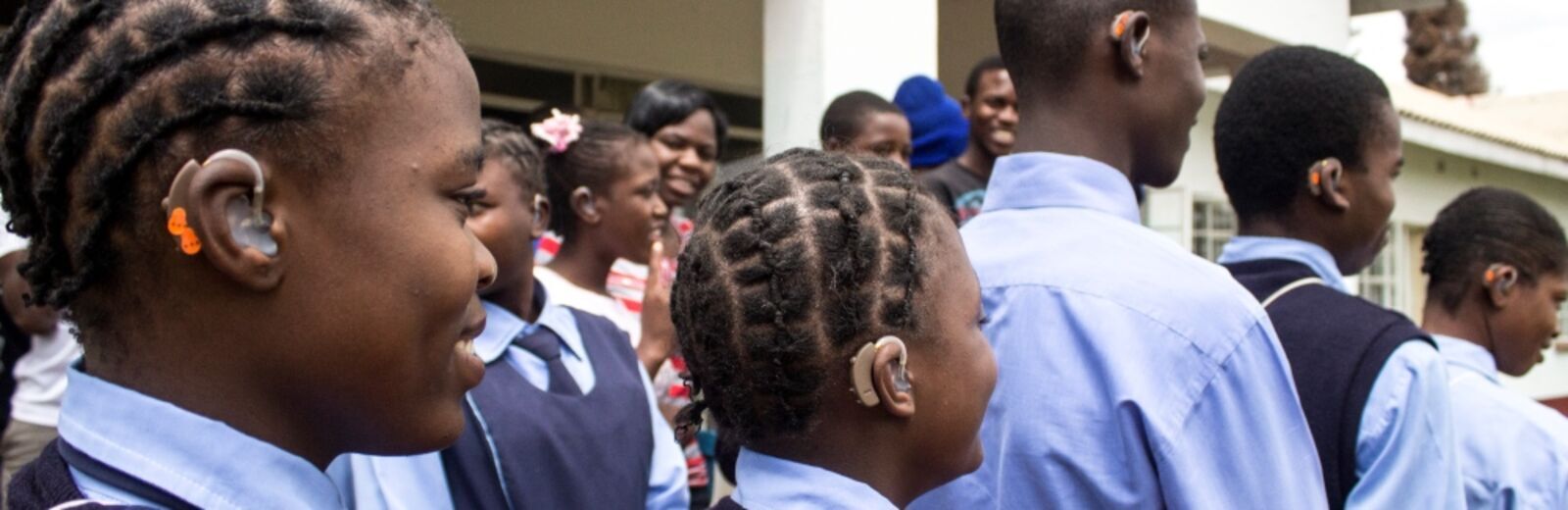
Join a global community of professionals working to improve the provision of healthcare around the world and address modern global health challenges.
The postgraduate diploma provides you with the core principles and skills needed to improve the provision of healthcare around the world and address modern global health challenges:
- Learn in an international learning environment, with fellow professionals from a range of countries and areas of expertise.
- Tailor your course to align your skills to your own interests
- Develop the skills and knowledge to further your career in international and national health systems and organisations
This 9-month course provides more flexibility to those who are unable to spend an entire year in the UK due to finances, work or other commitments, while still providing the professional development opportunities necessary for global public health practitioners. It does not include the dissertation project, which gives you more time and flexibility to study your core and optional modules.
Previous students of the diploma can return and use the credits obtained to complete our MPH(I) course within three years, which allows you more flexibility to study in the way that best suits you.
Make an Impact
Our course is designed to provide health professionals with an understanding of the health needs of populations. You'll learn how to effectively intervene to strengthen health services and systems and improve health in an international context.
Students can also study this subject at Master of Public Health (International) (12 months with dissertation); or Postgraduate Certificate level (4 months).
The course is delivered by the Nuffield Centre for International Health and Development, based in the Leeds Institute of Health Sciences.
The course is designed to give you the opportunity to specialise in one of two streams in Public Health:
Stream A - a focus on public health interventions and services
Stream B - a focus on health policy and health systems
On this course, you have the opportunity (dependent on travel restrictions – please see our Course terms and conditions) to take part in a study visit to Geneva, attending workshops and meetings with the World Health Organisation and other health-related UN and international organisations.
Learn from the experts
You'll also learn from academic staff who have a wide range of expertise reflecting the multi- disciplinary nature of Public Health. Our academics are engaged in both public health systems, service delivery and intervention research which has had positive impact on policy and practice at global and national levels.
Our academic staff have all worked in the health systems of low- and middle-income countries and have contextual knowledge of the opportunities and challenges faced by the public health services and programmes.
Explore Leeds
Discover our campus, facilities and accommodation with our 360 virtual experience platform.
With immersive 360 experiences, image galleries, virtual tours, videos and day-in-the-life content, you can take a personalised, interactive tour of campus and explore the University's academic, social and residential environments from anywhere in the world.
You can get a feel for what it's really like to live, learn and belong at the University of Leeds – all from the comfort of home.
Course details and modules
This course has two-streams, meaning you can choose the one that best suits your professional goals.
- Stream A - a focus on public health interventions and services
- Stream B - a focus on health policy and health systems
Year 1 compulsory modules
| Module Name | Credits |
|---|---|
| Introduction to Global Health and Epidemiology | 30 |
| Health Systems Research Methods | 15 |
Learning and teaching
You'll learn through a mixture of lectures, seminars, group work, workshops, tutorials and case studies. You will learn in an international and diverse classroom environment, with students from different countries and academic staff with lived and work experiences outside the UK. You will contribute to an active learning environment, which invites you to reflect on and share your own experiences while learning from others.
Some study sessions use the University's computer resources, with support to enhance your competence in the use of information technology. You will have access to our virtual learning environment, which includes teaching materials and resources to prepare you for assignments and your own research.
You’ll be able to use University facilities for independent study, such as computing facilities and the Health Sciences library, with its extensive collection of online journals. You will also have access to the newly refurbished Worsley Building with new teaching spaces and a social space specifically for postgraduate students.
On this course, you’ll be taught by our expert academics, from lecturers through to professors. You may also be taught by industry professionals with years of experience, as well as trained postgraduate researchers, connecting you to some of the brightest minds on campus.
Assessment
You will be assessed by using a range of assessments. This range of coursework develops your academic skills and supports your future career. They are designed to assess your understanding and application of international health and also to develop essential workplace skills, including analysing and synthesising contemporary research-based knowledge and presenting evidenced-based thinking in a coherent manner in a variety of formats.
Collaborative work is also an important part of the course. You will be encouraged to work and interact with academic staff and classmates and develop teamwork skills.
Applying
Entry requirements
This course provides health and related professionals with the ability to improve public health, essential health care, and preventive interventions and strengthen health services and systems in local and global contexts. You will interact with staff and fellow professionals from a range of countries and areas of expertise.
In order to be accepted onto the MPH program, an applicant must:
a) hold a Second Class Honours degree or above in medicine, health, social sciences, or other relevant disciplines together with a minimum of one-year (full-time) relevant experience in health or related sectors either in private, public or non-government organisations such as charitable organisations.
Or
b) hold a professional diploma in health or other relevant disciplines, together with 5 years relevant experience in health or related sectors either in private, public or non-government organisations, such as charitable organisations.
Work experience is preferred to be in a low or middle-income country. These include working as doctors, dentists, pharmacists, nurses, midwives, district health officers, community nurses or midwives, environmental health officers, health education and health promotion, and working in health management, administration, or health promotion. Our alumni include people with different backgrounds, eg health economics, anthropology, social sciences, journalism and media whose work focused on health. If you are not sure about the relevance of your experience, please contact us.
English language requirements
IELTS 6.5 overall, with no less than 6.0 in all components. For other English qualifications, read English language equivalent qualifications.
Improve your English
International students who do not meet the English language requirements for this programme may be able to study our postgraduate pre-sessional English course, to help improve your English language level.
This pre-sessional course is designed with a progression route to your degree programme and you’ll learn academic English in the context of your subject area. To find out more, read Language for Science (6 weeks) and Language for Science: General Science (10 weeks).
We also offer online pre-sessionals alongside our on-campus pre-sessionals. Find out more about our six week online pre-sessional, our 10 week online pre-sessional or our 16 week online pre-sessional.
You can also study pre-sessionals for longer periods – read about our postgraduate pre-sessional English courses.
How to apply
The deadline for applications is 31 July 2027.
All applicants for taught postgraduate courses should apply online. Applicants can track the application at each stage of the process through the applicant portal and it is recommended that they check the portal regularly for updates.
Certificate and transcripts
As part of your application, please upload a copy of your degree certificate (if you have graduated) and your official degree transcript. Your degree transcript must be signed and stamped. If you have not yet graduated, please provide your official interim transcript, showing the modules you are currently studying and the marks you have achieved to date.
Work Experience – CV/Resume
CVs are mandatory. Applicants must upload their CV upon submission of their application, which must contain details of their work experience. You must meet the minimum work experience requirement at the time of submitting the CV for the application. Acceptable work experience is generally:
- Paid professional positions
- Structured voluntary work (whilst part-time employment is insufficient to satisfy the work experience requirement, it may contribute to it)
- National Service is acceptable if it is related to publish health.
Appropriate professional and work include:
- Public Health workers/researchers
- Clinical professions (Doctors, Nurses, Midwives, Dentists)
- Academics in educational and research institutions (with a focus on public health or health management)
- Managers/Officers of health programmes in Governmental or non-governmental organisations.
- Health Policy makers/advocates (with a health or social science background)
- Health Educators
- Environmental Health/Water/Sanitation Officers
- Other allied health professional with experience in public health which may include nutritionists, veterinarians, occupations health practitioners, health economists, sociologists, anthropologists, social workers, etc.
Work experience in the following areas is generally not counted:
- Work that is undertaken in a high-income country unless it focuses on working in: international public health/refugee/migrants
- Entirely lab-based roles
- Solely clinical experience (unless it is linked to public health)
- Teaching at a level below higher education (e.g. school, college)
- Work in Alternative Medicine or Traditional Medicine
- Internship roles of any kind – for medical degree this includes house officer (or equivalent) roles
At a minimum, your CVs should include:
- Months and dates for each role
- The position, company and country where the work experience took place
- A brief description of the tasks conducted during that role to demonstrate the experience gained working in a health service, program, intervention or health system.
Supporting Statement
Strong supporting statements include:
- Personal reflections integrated with information about previous work and academic experiences.
- How the course will contribute to future career goals
- Evidence that you have engaged with and understood the course's learning objectives, or some of the modules in the course. This information is available on Course Search and The Nuffield Centre’s website.
The ‘Apply’ link at the top of this page will take you to information on applying for taught programmes and to the University's online application system.
If you're unsure about the application process, contact the admissions team for help.
The ‘Apply’ link at the top of this page will take you to information on applying for taught programmes and to the University's online application system.
If you're unsure about the application process, contact the admissions team for help.
Please see our How to Apply page for information about application deadlines.
Read about visas, immigration and other information in International students. We recommend that international students apply as early as possible to ensure that they have time to apply for their visa.
Admissions policy
Admissions Policy for Clinical and Practice Courses in the Faculty of Medicine and Health 2027-28
This course is taught by
Contact us
School of Medicine Postgraduate Admissions
Email: pgmed-admissions@leeds.ac.uk
Fees
UK: £8,800 (Total)
International: £20,066 (Total)
Finding funds to study at the Nuffield Centre
If you would like to find out more information about scholarships at the Nuffield Centre, you can discover the relevant postgraduate funding options here.
Read more about paying fees and charges.
For fees information for international taught postgraduate students, read Masters fees.
Additional cost information
Fees for the optional one-week study tour
The cost of the optional one-week tour to Geneva (see Course overview) is not included in the course fees.
Students who choose the study tour as an optional module pay approximately £675. Students who attend the study tour for their professional development pay approximately £900. These fees include travel and accommodation.
As these costs are only approximations, The Nuffield Centre shares information about these fees in offer letters and during the first semester of the course.
Other costs associated with visas (such as visa handling and transport to the visa centre in Manchester), meals in Geneva and any other personal costs are not included in the fees above.
There may be additional costs related to your course or programme of study, or related to being a student at the University of Leeds. Read more on our living costs and budgeting page.
Scholarships and financial support
If you have the talent and drive, we want you to be able to study with us, whatever your financial circumstances. There may be help for students in the form of loans and non-repayable grants from the University and from the government. Learn more about Masters funding.
Scholarships are also available to help fund your Masters. Find out more and check your eligibility below:
Studying in the School of Medicine at Leeds is an amazing opportunity, but we know that the cost can be difficult for many people to meet. If you are keen to join us, a range of funding opportunities are available.
Career opportunities
Graduates of this programme have gone on to work in Ministries of Health, international organisations, civil society organisations, universities, consulting firms and private health providers.
The Nuffield Centre for International Health and Development has taught international health and development programmes at Leeds for over 45 years and so has a large alumni network of public health specialists, health systems experts, health managers and planners holding senior positions around the world.
A number of alumni have also published their work in world-leading global public health journals. Read more about our alumni.
Top 10 most targeted for 10+ years
by the UK's leading employers
Careers support
At Leeds, we help you to prepare for your future from day one.
Our Careers Service has the global expertise and sector-spanning industry partnerships that, combined, go well beyond simply helping you get a job. They provide you with the resources you need to upskill and achieve the future you aspire towards – even in the face of lightning-paced change.
- Dedicated Employability Team – meet with our qualified careers consultants and specialist employability and placements officers, on hand to help you choose the right path and develop the skills to get there. They can support with CV and cover letter writing, LinkedIn profile building, mock interviews and navigating AI: get confident with tailored advice and techniques.
- Employability and networking events – get involved in a full range of events, including careers fairs and specialist industry talks with employers who are actively recruiting. You’ll also benefit from mentoring and a supportive careers community, helping you make connections, build your network, and shape your journey as a future professional.
- Skills training – we embed transferable skills training in all our programmes to support your transition to the workplace. Gain expertise employers value, such as communication, problem-solving and research and data analysis.
- MyCareer system – access a dedicated portal where you can book careers appointments, view helpful resources and browse vacancies and events. Access digital tools, including LinkedIn support, video interview preparation, plus global job market and visa guidance. We also offer pre‑arrival support to help you prepare for career planning in the UK and make the most of your time with us.
- Exclusive opportunities – bring your enterprise to market with our award-winning business advice service, Spark. Apply for vacancies only available to our students. And hone your skills further with Leeds University Union, home to volunteering opportunities and over 300 clubs and societies.
Explore more about your employability opportunities at the University of Leeds.