Course overview
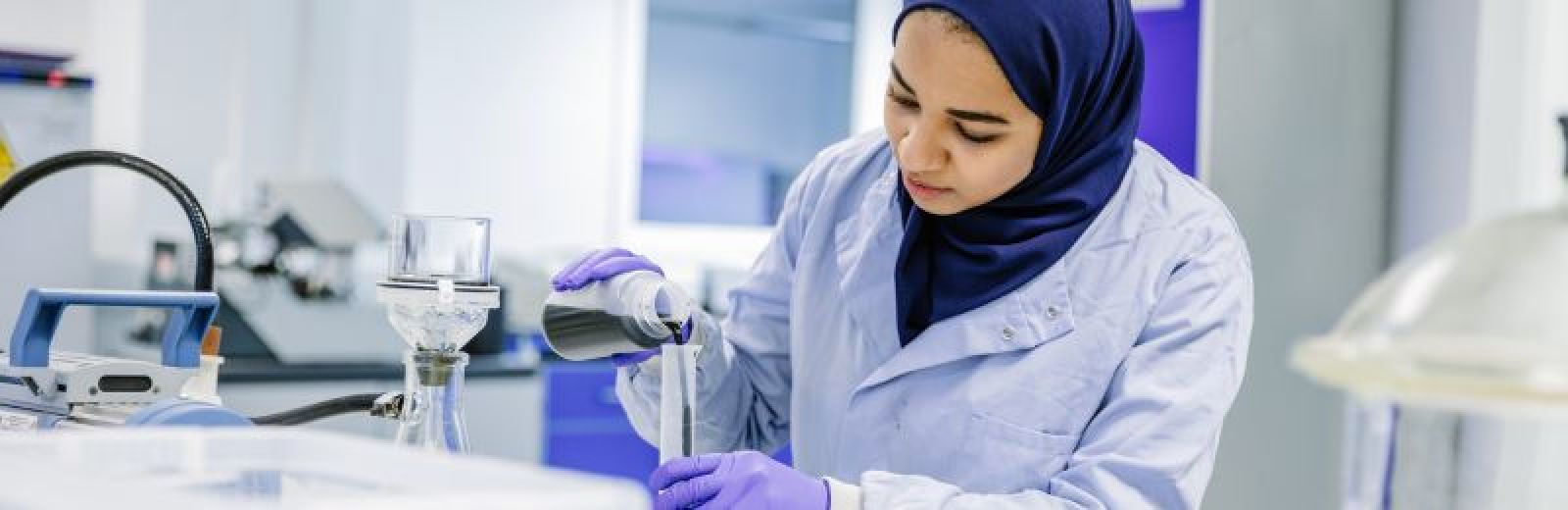
There are many challenges we face globally. But one of the most pertinent is how to protect and maintain our environment. That’s why governments worldwide are looking for environmental engineers to provide solutions in areas such as public health, air pollution, waste and water.
Our Environmental Engineering MSc delivers the core foundations of the discipline: water resources and supply, wastewater, solid waste, contaminated land and air quality, from urban emissions to the indoor environments where we spend most of our time. You'll work with real environmental data throughout, generated in our public health laboratories, in monitoring campaigns and in the field, and develop the professional project management skills that turn sound engineering into economically sustainable systems.
You'll study in the School of Civil Engineering, which ranks highly globally and is actively involved in developing 'internationally excellent' research, much of which shapes the course.
This means you'll be learning industry-relevant knowledge and developing transferable skills sought after by almost every industry worldwide, opening the door to many career paths in areas like engineering, environment, construction, energy, transport and education.
Why study at Leeds:
- This Masters degree is accredited by the Joint Board of Moderators.
- Master the most up-to-date practices and techniques recognised in industry on a course that has been directly informed and advised by the Institution of Civil Engineers.
- Enhance your career prospects and become part of our successful alumni who have pursued careers in related positions, working for organisations like ARUP, Thames Water and the Federal Ministry of Water Resources.
- Experience excellent practical and theoretical teaching delivered by a programme team with a wealth of expertise and industrial experience across many relevant areas such as microbiology and aerobiology.
- Access research-grade equipment and facilities including our public health laboratories, a class II microbiology laboratory and specialist software you’ll need throughout the course.
- Conduct your own individual research project as part of your course and gain industry experience in managing a project that focuses on a real-world problem, whilst building professional skills in research, decision making and planning.
- Advance your knowledge and skills in critical areas sought after in industry such as project and asset management, water resource management, air quality, groundwater pollution and environmental microbiology.
- Our globally-renowned research conducted right here in our School feeds directly into the course, shaping your learning with the latest thinking in engineering and sustainability.
Explore Leeds
Discover our campus, facilities and accommodation with our 360 virtual experience platform.
With immersive 360 experiences, image galleries, virtual tours, videos and day-in-the-life content, you can take a personalised, interactive tour of campus and explore the University's academic, social and residential environments from anywhere in the world.
You can get a feel for what it's really like to live, learn and belong at the University of Leeds – all from the comfort of home.
Accreditation
This MSc is accredited by the Joint Board of Moderators (JBM) for the period 2025 to 2029. The JBM accredits on behalf of the Engineering Council through five professional bodies: the Institution of Civil Engineers (ICE), the Institution of Structural Engineers (IStructE), the Chartered Institution of Highways and Transportation (CIHT), the Institute of Highway Engineers (IHE) and the Permanent Way Institution (PWI).
The programme is accredited as Further Learning towards Chartered Engineer (CEng) registration. If you already hold an accredited bachelors degree, this MSc completes the educational base you need to work towards CEng through your chosen institution's membership route. If your first degree is not accredited, the JBM institutions can advise on individual assessment of your qualifications.
Accreditation gives employers an independent assurance of the quality and currency of your degree and puts you on the most direct route to chartership.
Course details and modules
Modules that run throughout each semester will develop your knowledge across the breadth of environmental engineering: water, air, land and waste.
On water, you'll explore integrated water resource management, the design and operation of water supply systems, and natural treatment approaches for wastewater and faecal sludge. On waste, you'll examine the diversion of organic wastes from landfill and how energy is recovered from them, alongside the landfill, mechanical-biological and thermal treatment options available for solid waste. On land, you'll study engineering responses to complex groundwater and soil pollution.
Air quality runs throughout the course, from urban emissions and their dispersion to the indoor environments where we spend most of our time, including the airborne microorganisms that affect our health. You'll work with real environmental data, developing the monitoring, laboratory and modelling skills the sector expects, and you'll consider how legislation is used to protect the environment, the role of public health engineers, and how engineering projects are planned and delivered sustainably.
Course structure
The list shown below represents typical modules/components studied and may change from time to time. Read more in our terms and conditions.
Indoor and Urban Air Quality – 15 credits
This module introduces the sources, dispersion and health and environmental impacts of a range of airborne contaminants, including microorganisms, in urban and indoor environments. You'll gain an understanding of the issues of poor air quality, the regulatory environment, approaches to analysing exposure and risk, and operational and engineering approaches to controlling and mitigating impacts. You'll measure air quality directly using our monitoring equipment, then interpret the data you record.
Water Resource Management – 15 credits
Explore the principles of integrated water resources management and the tools necessary to undertake and regulate it. The module covers the design of water systems and water treatment, including point source development, network design and distribution, and the operational and management issues that accompany them. You'll evaluate competing demands on a resource and make decisions under uncertainty.
Environmental Microbiology – 15 credits
A practical introduction to the classification of microorganisms, their importance in a range of environments and the impact they can have on the environment and human health. You'll develop hands-on laboratory skills in our class II microbiology facilities and go on a field trip to measure microorganisms along the River Aire. You’ll learn how microbial data is generated and quantified, and gain an overview of key legislation for environmental protection and methods for assessing environmental impact.
Solid Waste Management – 15 credits
Cover the key challenges associated with the generation of municipal solid waste and its collection, recycling and ultimate disposal. You'll consider landfilling, thermal treatments and mechanical-biological treatment options, including outline designs of the key unit processes, and the diversion of organic wastes from landfill for energy recovery.
Groundwater Pollution and Contaminated Land – 15 credits
This module is about engineering responses to complex groundwater and soil pollution. You'll focus on developing an appropriate understanding of the interactions between soils, groundwater and pollutants, working with site investigation data to characterise contamination and appraise remediation options. You'll also cover the link between engineering, earth science, environmental management and sustainable development.
Water Supply – 15 credits
You'll study the appropriate design, maintenance, operation and management of water supply systems, including in resource-constrained environments. The module introduces technical knowledge related to water supply systems, including system design and water quality issues. You'll also study the management of systems and the maintenance of water safety within drinking water systems.
Wastewater and Faecal Sludge Treatment – 15 credits
This module provides a broad-ranging overview of natural wastewater and faecal sludge treatment systems and wastewater reuse. You'll study design approaches for waste stabilisation ponds, rock filters and constructed wetlands, with major natural treatment processes covered in detail. The emphasis is on comprehensive public health engineering solutions for small communities, peri-urban areas and decentralised systems, including wastewater and sludge reuse.
Principles of Sustainable Project Management – 15 credits
Explore key project management concepts, their evaluation and their application to engineering projects. You'll develop an understanding of project life cycle management, explore the relationship between project delivery and sustainability goals, including carbon, and build an understanding of the ethical dimensions of planning and delivering projects.
Dissertation – 60 credits
You'll work with your supervisory team to complete your independent research project, one of the most satisfying elements of this course. It's a chance to demonstrate the knowledge and skills you've gained, focusing on a real-world problem that explores your specific interests or relates to your career ambitions. Projects can be industry-linked, addressing challenges faced by our external partners.
To support your project, we'll teach you the theories and practices you'll need to conduct it efficiently. You'll examine how to define research problems and gaps in understanding, learn how to critically review the literature relevant to your problem, and explore the research methods and instruments you'll need to collect and analyse data effectively.
Example projects by our students have included:
- Predicting indoor air quality in UK homes from continuous monitoring data
- Quantifying bioaerosol exposure in a naturally ventilated hospital ward
- Modelling infection transmission onboard long-haul flights
- Modelling climate change impacts on wastewater treatment performance
- Appraising remediation options for a brownfield site using site investigation data
- Carbon footprinting of municipal solid waste collection strategies
Enhance Your Academic and Subject-Specific Language
As part of your course, you will have access to the Professional and Academic Communication module that provides valuable insights into studying a postgraduate degree in the UK while helping you develop your academic and subject-specific vocabulary.
Through a combination of in-person workshops and independent online study, you will explore the use of technology—such as translation tools and generative AI—to support effective communication. You will also build the language and literacy skills necessary to become a more confident and capable communicator throughout your studies.
Learning and teaching
Our groundbreaking research feeds directly into teaching, and you’ll have regular contact with staff who are at the forefront of their disciplines. You’ll have regular contact with them through lectures, seminars, tutorials, small group work and project meetings.
Throughout your studies, you’ll also benefit from a structured support system, with a personal tutor who will offer help and advice about your approach to studying and how to become adept at independent learning.
Independent study is also important to the programme, as you develop your problem-solving and research skills as well as your subject knowledge.
Specialist facilities
You’ll benefit from using our specialist facilities, such as our public health laboratories with separate areas for solid waste, water and wastewater, and a class II microbiology lab and clean room. We have all the specialist software you’ll need for your programme.
Programme team
On this course, you’ll be taught by our expert academics, from lecturers through to professors. You may also be taught by industry professionals with years of experience, as well as trained postgraduate researchers, connecting you to some of the brightest minds on campus.
Assessment
You’ll be assessed using a range of techniques including case studies, technical reports, presentations, in-class tests, assignments and exams.
Applying
Entry requirements
A bachelor degree with a 2:1 (hons) in a relevant engineering, science or numerate subject.
We also encourage you to apply if you have a 2:2 (hons) in one of the subjects listed above, relevant work experience or professional qualifications. We take a flexible and inclusive approach and consider every application on its individual merits.
International
We accept a range of international equivalent qualifications. For more information, please contact the Admissions Team.
English language requirements
IELTS 6.5 overall, with no less than 6.0 in any component.. For other English qualifications, read English language equivalent qualifications.
Improve your English
International students who do not meet the English language requirements for this programme may be able to study our postgraduate pre-sessional English course, to help improve your English language level.
This pre-sessional course is designed with a progression route to your degree programme and you’ll learn academic English in the context of your subject area. To find out more, read Language for Engineering (6 weeks) and Language for Science: Engineering (10 weeks).
We also offer online pre-sessionals alongside our on-campus pre-sessionals. Find out more about our six week online pre-sessional, our 10 week online pre-sessional or our 16 week online pre-sessional.
You can also study pre-sessionals for longer periods – read about our postgraduate pre-sessional English courses.
How to apply
Please read our How to Apply page for full details, including application deadlines and what to include with your application.
Applicants are encouraged to apply as early as possible.
30 July 2027 – International applicants
10 September 2027 – UK applicants
Click below to access the University’s online application system and find out more about the application process.
If you're still unsure about the application process, contact the admissions team for help.
Read about visas, immigration and other information in International students. We recommend that international students apply as early as possible to ensure that they have time to apply for their visa.
Admissions policy
University of Leeds Admissions Policy 2027
This course is taught by
Contact us
Fees
UK: £14,900 (Total)
International: £33,800 (Total)
Read more about paying fees and charges.
For fees information for international taught postgraduate students, read Masters fees.
Additional cost information
Standard travel and accommodation costs associated with compulsory field trips are covered by the University. However, you must pay for subsistence, incidental or personal expenses such as suitable clothing and footwear.
There may be additional costs related to your course or programme of study, or related to being a student at the University of Leeds. Read more on our living costs and budgeting page.
Scholarships and financial support
If you have the talent and drive, we want you to be able to study with us, whatever your financial circumstances. There may be help for students in the form of loans and non-repayable grants from the University and from the government. Learn more about Masters funding.
Scholarships are also available to help fund your Masters. Find out more and check your eligibility below:
Career opportunities
Studying this MSc will build your technical knowledge in an exciting and relevant profession, whilst helping you develop a holistic professional skill set that is largely transferable across almost every industry and sought after by corporations worldwide.
From water to energy, transport to engineering, the career opportunities open to you with the experience you’ll learn on this course are wide-ranging and will give you a lot of options when you graduate.
Our graduates from this course have secured positions at companies such as:
- Water Engineer, Federal Ministry of Water Resources
- Project Practitioner, Primetals Technologies
- Environmental Analyst, Riverside Environmental Services Ltd
- Project Coordinator, EFC Group
- Sustainability Engineer, ARUP
- Catchment Planner, Thames Water
- Construction Engineer, Parsons Corporation
- Business Development Engineer, Amazon Energy Limited
- Process Engineer, Veolia Water
- Water, Sanitation and Environmental Engineer, Air Water Earth (AWE) Ltd Consulting Engineers
- Project Engineer, Aquatec-Maxcon
Top 10 most targeted for 10+ years
by the UK's leading employers
Careers support
At Leeds, we help you to prepare for your future from day one. We have a wide range of careers resources — including our award-winning Employability Team who are in contact with many employers around the country and advertise placements and jobs. They are also on hand to provide guidance and support, ensuring you are prepared to take your next steps after graduation and get you where you want to be.
- Employability events — we run a full range of events including careers fairs in specialist areas and across broader industries — all with employers who are actively recruiting for roles.
- MyCareer system — on your course and after you graduate, you’ll have access to a dedicated careers portal where you can book appointments with our team, get information on careers and see job vacancies and upcoming events.
- Qualified careers consultants — gain guidance, support and information to help you choose a career path. You’ll have access to 1-2-1 meetings and events to learn how to find employers to target, write your CV and cover letter, research before interviews and brush up on your interview skills.
- Opportunities at Leeds — there are plenty of exciting opportunities offered by our Leeds University Union, including volunteering and over 300 clubs and societies to get involved in.
Explore more about your employability opportunities at the University of Leeds.
Find out more about career support.
Work placements and industry experience
While studying at Leeds, you’ll have the opportunity to complete an eight-week virtual work experience, working on a project aligned with your academic discipline in partnership with a relevant organisation.
You’ll develop key professional skills and gain valuable insight into your chosen field, helping to solve a real business challenge based on a live company brief.
This experience will enhance your CV, helping you stand out in the competitive graduate jobs market and improving your prospects of securing the career you want.
Benefits of the virtual work experience:
- Fully online and designed to fit around your studies.
- Opportunities to build your professional network.
- Gain valuable insight and consultancy experience with a UK or international organisation, working on a time limited brief.
- Collaborate in multidisciplinary teams to tackle real business challenges.
- Apply your learning in practice and develop hands-on skills.
- Strengthen your employability and career prospects.
- Build confidence, make new connections and explore your future career options.
Throughout the eight-week programme, you’ll be supported by an academic tutor who will meet regularly with your group. You’ll also receive guidance from the employability team at every stage.
We’ll provide tailored careers support sessions to help you develop professional behaviours and showcase your skills to employers. On completion, you’ll receive a reference letter from Leeds recognising the skills and experience you have gained.
When you begin your MSc, the employability team will introduce the scheme during a lecture in your first month, answer any questions and explain how to register.