Course overview
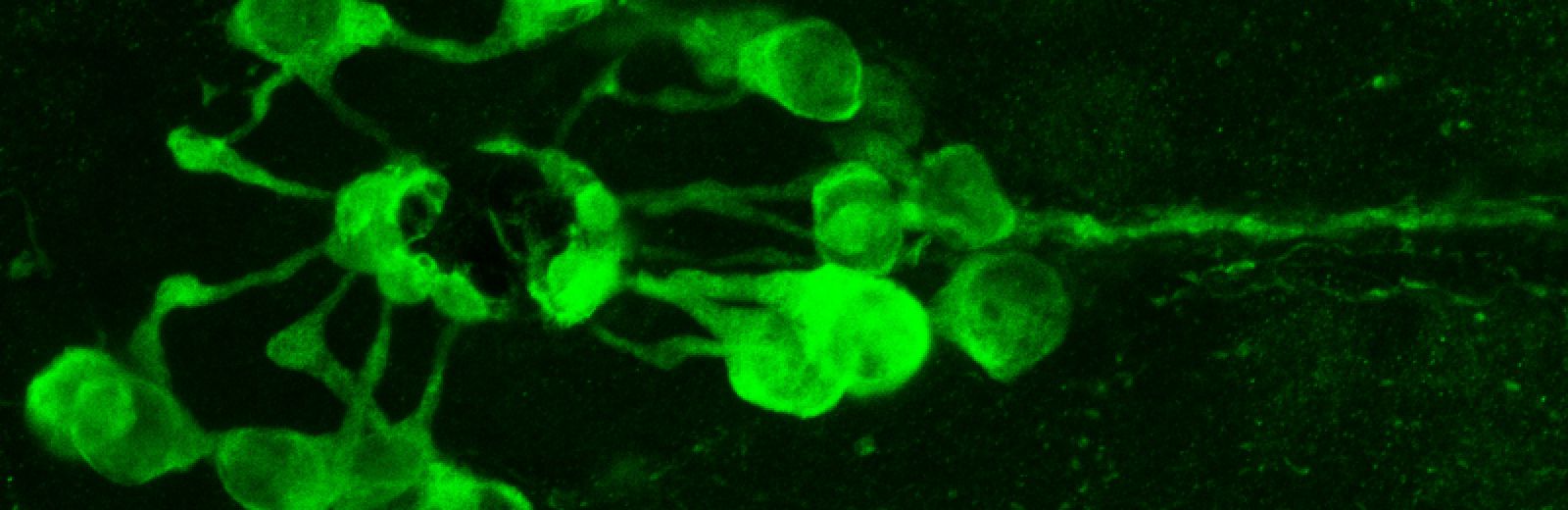
Learn about the human body, brain and nervous system as you explore neurogenerative diseases, neuroplasticity and neuropharmacology.
Neuroscience is the study of the nervous system, which includes the brain and spinal cord, and how they control our behaviour, perceptions, learning and memory. Understanding this area is essential to providing humankind with solutions to a range of complex global challenges, predominantly in health and wellbeing.
On this course, you’ll be equipped with an integrated knowledge of the human body, brain and nervous system. Topics covered will include neurodegenerative diseases (such as Parkinson’s disease or Alzheimer’s disease), neuroplasticity and neuropharmacology.
At Leeds, we’re always thinking about your next steps after graduation. We’ll make sure you’re ready for the workplace, with the knowledge, skills, and attributes for a successful career. You'll develop key skills as you immerse yourself in cutting-edge topics and techniques, all delivered by our world-leading researchers.
If you’re eligible, you can also convert this three-year degree into an integrated Masters (MBiol) with an additional year of specialist training. You would study advanced research topics and undertake your own extended research project within one of the major research laboratories in the School of Biomedical Sciences or an appropriate period of work-based practice.
By studying neuroscience, you’ll better understand how the brain works and how it affects human behaviour, with the potential to advance medicine and treatments.
“The choice of modules really fit with what I’m interested in. I got on very well with the neuroscience lecturers on the open day and got talking to them about their current research. They recommended some good books to read and I really felt like I would enjoy being taught by them.”
Why study at Leeds
- A hub for biological sciences: Study with one of the largest centres for biological sciences research in the UK, with access to cutting‑edge facilities, industry links and specialist research opportunities.
- A springboard for your future: A course designed to provide a broad scientific foundation and key graduate skills for those interested in neuroscience.
- Develop specialist skills: Develop experimental skills in specialised laboratories. Use cutting-edge instrumentation such as the EVOS microscopes and gain hands-on practical experience in labs.
- Undertake your own research: The opportunity to undertake an independent or team-based Capstone research project under the supervision of a field-leading academic, further developing the key skills and attributes that will set you apart in the graduate job market.
- Spend a year in industry: Our year in industry programme allows you to gain experience working with organisations, developing new skills for your CV.
- Broaden your horizons abroad: Experience life and learning in a different country through our study abroad programme, where you'll gain fresh perspectives and develop skills valued by employers.
- Flexibility to transfer between programmes: Flexible options to transfer onto other suitable and related degrees at the end of year 1, as many programmes within our School share a common first year.
Accreditation
This course offers the option to apply for a year in industry as part of your course. If you are successful in your application and undertake this work placement, you'll graduate with the BSc Pharmacology (Industrial) variant, which is accredited by The Royal Society of Biology.
Advanced Degree Accreditation by the Society recognises academic excellence in the biosciences and highlights degrees that educate the research and development leaders and innovators of the future. The Advanced Accreditation criteria require evidence that graduates from the programme meet defined sets of learning outcomes, including gaining a substantial period of research experience.
This accreditation is also applicable to the following course variants: MBiol Pharmacology; MBiol Pharmacology (Industrial); MBiol Pharmacology (International).
Course details and modules
Course structure
The list shown below represents typical modules/components studied and may change from time to time. Read more in our terms and conditions.
Most courses consist of compulsory and optional modules. There may be some optional modules omitted below. This is because they are currently being refreshed to make sure students have the best possible experience. Before you enter each year, full details of all modules for that year will be provided.
For more information and a list of typical modules available on this course, please read BSc Neuroscience in the course catalogue.
Year 1
Compulsory modules
Team Based Solutions for Local Challenges in Human Sciences (20 credits)
You’ll be provided with the opportunity to address a current human health-related challenge in a facilitated team-based environment. You'll develop the core skills necessary to tackle challenges which may cover topics such as the prevention and treatment of disease or healthy ageing.
Practical Application of Clinical, Laboratory and Field Skills for Human Sciences (20 credits)
This module covers essential skills for scientific research in the biosciences (including neuroscience). It includes practical application of these skills in a laboratory and clinical setting, as well as skills that support research design, hypothesis testing, scientific writing and data analysis.
Structure and Function (Anatomy and Physiology) of Human Body Systems (20 credits)
You’ll be introduced to the core concepts underpinning structure and function of human body systems, with an emphasis on how systems are structured, operate and interact. You will also discover how the environment, exercise and disease can disturb these core systems, and the underpinning physiology.
The Basis of Life (20 credits)
You’ll learn about the fundamental processes of life, identifying the key concepts that underpin the biological processes in all living organisms, from bacteria to mammals. On completion, you'll have a comprehensive grounding in the molecular basis of life from the atomic scale up to cells.
Introductory Concepts in Neuroscience and Pharmacology (20 credits)
This module will introduce you to the foundational neuroscience concepts of structure and function, and how systems level function emerges. These concepts will be explained using examples drawn from across the human nervous system in health and disease, and from the experimental approaches used in neuroscience research. Introductory Concepts in Pharmacology will introduce you to the foundational concepts underpinning pharmacology: pharmacokinetics, pharmacodynamics, clinical pharmacology, and drug discovery and development.
Optional modules
You will be required to study 1-2 modules from the following list of optional modules:
List 1
- Introduction to Immunology (10 credits)
- The Microbial World (10 credits)
- Introduction to Genetics (10 credits)
If only one module is selected from list 1, choose an optional module from list 2
List 2
- Psychology for Healthy Minds (10 credits)
- Introduction to Human Nutrition (10 credits)
- Forensic Psychology (10 credits)
You may also select up to 20 credits of Discovery modules.
Year 2
Compulsory modules
Experimental Skills in Neuroscience (20 credits)
You’ll explore principles of experimental design hypothesis testing and develop more advanced skills in data evaluation using statistical methods. The module will also focus on dissemination of experimental findings using written reports and other communication formats.
Advanced Concepts in Neuroscience (40 credits)
This module introduces advanced concepts underpinning the study of neuroscience including the study of neuroanatomy and cellular neuroscience, followed by neurotransmission and neuropharmacology. It will also cover cardiac, circulatory and respiratory physiology as well as the underlying principles of the drug discovery process.
Sensory and Motor Neuroscience (10 credits)
This module explores the anatomy and physiology of sensory and motor systems, as well as integration across different systems. Some aspects of this module will be framed in the context of disorders and conditions that alter sensory and motor functions.
Team-based Solutions for Global Challenges in Human Sciences (20 credits)
Aligned with key UN sustainability goals, you’ll build skills in knowledge application, analysis and scientific data presentation. Working as a team you’ll research and create biomedical solutions to a global grand challenge, developing key academic and professional skills. This includes the critical analysis of research papers, communication, team-working, planning, organisation, and negotiation.
Optional modules
You will study 10-30 credits from the following list of optional modules:
- The Imprinted Brain (10 credits)
- Applied Concepts in Drug Development (20 credits)
- Medical Immunology (10 credits)
- Human Diseases (10 credits)
- Tissue Engineering and Regenerative Medicine Essentials (10 credits)
- Fundamentals in Cell and Cancer Biology (20 credits)
- Medical Microbiology (20 credits)
- Health Promotion: Applications of Theory and Practice (10 credits)
You may also select up to 20 credits of Discovery modules.
Year 3
Compulsory modules
Research Skills and Professional Development (20 credits)
This module will develop the competencies – knowledge, skills, and behaviours – needed to succeed beyond your undergraduate degree. You'll be given ownership and responsibility for your professional development, allowing you to tailor your learning to support your capstone experience and address your specific professional developmental needs. It will facilitate your transition into the workplace, career or further study, thereby setting you up for success in your lifelong learning journey.
Capstone Research Project (40 credits)
You'll undertake a research, workplace, or social justice capstone experience, collaborating on a project to co-create a solution or output to a problem relevant to the Biomedical Sciences. Project-based experiential learning is a key feature of the module, as you'll “learn by doing”. You'll be given ownership and responsibility for your education, developing new experiences and competencies that will be highly beneficial to your future career.
Optional modules
You will study 20-40 credits from the following list of optional modules:
- Research Topics in Neuroscience 1 (20 credits)
- Research Topics in Neuroscience 2 (20 credits)
You will study 20-40 credits from the following list of optional modules:
- Neurophysiology (20 credits)
- Inherited Disorders (20 credits)
- Animal Models in Discovery Biology and Drug Development (20 credits)
You can select 0-20 credits from the following list of optional modules:
- Reproductive Medical Science (20 credits)
- Advanced Cancer Biology (20 credits)
- Food and Cancer (10 credits)
You may also select up to 20 credits of Discovery modules.
Learning and teaching
Our teaching is delivered through a combination of large and small-group workshops and practicals. We take a student-centred approach to learning, and so our teaching is designed to enable student engagement through active learning approaches that include creative problem-solving, teamwork activities and mini projects. In this way, you are able to apply the theoretical knowledge learnt to practical, real-life contexts. We place a high value on practical teaching, and so a core part of your learning will focus on developing hands-on, practical, and associated research skills.
Independent study is an important part of university learning, and you’ll be expected to undertake private study. We will support you in becoming an independent learner through our teaching approaches and regular meetings with your personal tutor, who is there to advise you academically.
We use a range of digital tools to enhance your learning. Through our Minerva learning management system, you will be able to access our extensive library of online materials, some of which are designed specifically to support preparation prior to attending classroom sessions and discussing content with peers and teachers. In the classroom, educators use a variety of interactive digital tools to help you learn through discussion and debate. Laboratory practicals are accompanied by detailed online preparation guides and the use of electronic laboratory notebooks to ensure you get the most out of your time and develop workplace skills.
On this course, you’ll be taught by our expert academics, from lecturers through to professors. You may also be taught by industry professionals with years of experience, as well as trained postgraduate researchers, connecting you to some of the brightest minds on campus.
Assessment
We use a variety of assessment methods to help you develop a broad range of skills. These include practical work, data handling and problem-solving exercises, multiple-choice tests, group work, online and face-to-face discussion groups, computer-based simulations, essays, posters and oral presentations.
Wellbeing and support
The University of Leeds features an extensive network of excellent services dedicated to you and your wellbeing. We are here to help throughout your time in higher education, ensuring you have everything you need to succeed. For more information on the different facets of support you will have access to, please see our Wellbeing and Support page.
Entry requirements
A-level: AAB
Including Biology or Chemistry, plus another science or science-related subject. Critical Thinking and General Studies are excluded.
We accept the following:
- Science: Biology, Human Biology, Chemistry, Mathematics, Physics, and PE.
- Science-related: Computing, Environmental Science, Food Science, Geography, Geology, Psychology, and Statistics.
Applicants taking a Science A-level (in England) will be required to achieve a pass in the practical element in addition to the standard A-level grade requirement.
When an applicant is taking the Extended Project Qualification (EPQ), the Cambridge International Project Qualification (Cambridge IPQ) or Welsh Baccalaureate Advanced Skills Challenge Certificate, this can be considered alongside A-levels and may attract an alternative offer in addition to the standard offer. If you’re taking A-levels, this would be a one-grade drop from the standard offer. For example, A in one of the above qualifications with ABB at A-level.
GCSE: Grade 6 (B) or above at GCSE Maths and Grade 4 (C) or above at GCSE English. The Faculty of Biological Sciences will accept Level 2 Functional Skills as equivalent to C/4 in GCSE English.
Alternative qualifications
Access to HE Diploma
Pass 60 credits overall with 45 credits at Level 3, graded at D39M6P0, including distinctions in Biology, Mathematics or Chemistry. We accept Access courses in Applied Science and Science. Will also consider (depending on subject content):
- biochemical sciences
- biological and health science
- biological sciences
- biosciences
- combined sciences
- life and biological science
- physical sciences.
BTEC
BTEC Extended Diploma entry requirements: DDM plus A/B in A-level Biology or Chemistry. The preferred BTEC qualification subject is Applied Science (other subjects may be accepted).
BTEC Diploma entry requirements: DD plus A/B in A-level Biology or Chemistry. The preferred BTEC qualification subject is Applied Science (other subjects may be accepted).
Applicants with BTEC Extended Certificate/Subsidiary Diploma qualifications must normally have at least two A-levels, and at least one of these should be Biology or Chemistry (plus another science or science-related subject depending on the BTEC subject).
Cambridge Pre-U
D3/D3/M1, including D3 in Biology or Chemistry, plus another science or science-related subject. Global Perspectives excluded.
When an applicant is taking Global Perspectives, this can be considered alongside Pre-U subjects and may attract an alternative offer in addition to the standard offer. This would be D3/M1/M1 and grade D3 in Global Perspectives.
International Baccalaureate
31 overall with 6,6,5 at Higher Level, including Biology or Chemistry and another science or science-related subject.
Irish Leaving Certificate (Higher Level)
H2, H2, H2, H2, H3, H3, including H2 in Biology or Chemistry, and another science or science-related subject at a Higher Level.
Scottish Highers / Advanced Highers
Five Highers AABBB, with AB in two Advanced Highers
Including Biology or Chemistry, plus another science or science-related subject. Critical Thinking and General Studies are excluded.
We accept the following:
- Science: Biology, Human Biology, Chemistry, Mathematics and Physics.
- Science-related: Geography, PE, Psychology, Use of Maths and Statistics.
Scottish Higher: Scottish Highers not accepted on their own.
Read more about UK and Republic of Ireland accepted qualifications or contact the School’s Undergraduate Admissions Team.
Alternative entry
We’re committed to identifying the best possible applicants, regardless of personal circumstances or background.
Access to Leeds is a contextual admissions scheme which accepts applications from individuals who might be from low income households, in the first generation of their immediate family to apply to higher education, or have had their studies disrupted.
If you live in a neighbourhood where there is low participation in higher education, we may be able to give priority to your application.
Find out more about Access to Leeds and contextual admissions.
Typical Access to Leeds offer
Specific A Level subjects required – see entry requirement section above.
GCSE: Grade 6 (B) or above at GCSE Maths and Grade 4 (C) or above at GCSE English.
Access to Leeds: Pass
Interdisciplinary Science with Foundation Year
This course is designed for students whose backgrounds mean they are less likely to attend university (also known as widening participation backgrounds) and who do not currently meet admissions criteria for direct entry to a degree.
The course will give you the opportunity to be taught by academic staff and provides intensive support to enable your development of academic skills and knowledge. On successful completion of your foundation year, you will progress to your chosen degree course.
Find out more about the Interdiscplinary Science Foundation Year.
International foundation year
International students who do not meet the academic requirements for undergraduate study may be able to study the University of Leeds International Foundation Year. This gives you the opportunity to study on campus, be taught by University of Leeds academics and progress onto a wide range of Leeds undergraduate courses. Find out more about International Foundation Year programmes.
English language requirements
IELTS 6.0 overall, with no less than 5.5 in any component. For other English qualifications, read English language equivalent qualifications.
Improve your English
If you're an international student and you don't meet the English language requirements for this programme, you may be able to study our undergraduate pre-sessional English course, to help improve your English language level.
Fees
UK: £10,050
International: £33,800 (per year)
The amount of tuition fees you pay is based on whether you are classified as a home (UK) or international student. Find out how we assess your fee status.
Tuition fees for UK students
Tuition fees for UK undergraduate students starting in 2027/28 are £10,050.
Subsequent years
The UK government sets the maximum tuition fee caps that universities can charge UK students. This means your tuition fee in future academic years will reflect any changes set by the government.
From 2028/29 onwards, tuition fees are likely to increase annually, at least in line with inflation, and may rise further if the government increases the fee cap.
Tuition fees for international students
The international fee applies for each year of full-time study and will remain the same for the duration of your course.
Read more about tuition fees.
Tuition fees for a study abroad or work placement year
If you take a study abroad or work placement year, you’ll pay a reduced tuition fee during this period. For more information, see Study abroad and work placement years on our tuition fees page.
Additional cost information
There may be additional costs related to your course or programme of study, or related to being a student at the University of Leeds. Read more on our living costs and budgeting page.
Scholarships and financial support
If you have the talent and drive, we want you to be able to study with us, whatever your financial circumstances. There is help for students in the form of loans and non-repayable grants from the University and from the government. Learn more about undergraduate funding.
Scholarships are also available to help fund your degree. Find out more and check your eligibility below:
Applying
Apply to this course through UCAS. Check the deadline for applications on the UCAS website.
We welcome applications from mature students. We welcome applications from mature students from all backgrounds onto both full-time and part-time programmes.
International students apply through UCAS in the same way as UK students. Our network of international representatives can help you with your application. If you’re unsure about the application process, contact the admissions team for help.
Read about visas, immigration and other information in International students. We recommend that international students apply as early as possible to ensure that they have time to apply for their visa.
Admissions guidance
Visit our admissions guidance page for more information about applying to undergraduate courses in the Faculty of Biological Sciences.
Application process
The Faculty of Biological Sciences may consider applications submitted after this date. Availability of courses in UCAS Extra will be detailed by UCAS at the appropriate stage in the cycle.
Alternative Entry Scheme for mature applicants
As per the information detailed in the corresponding section of the University of Leeds Admissions Policy, the Faculty of Biological Sciences will consider prospective students via the Alternative Entry Scheme run by the Lifelong Learning Centre, where appropriate applicants will be referred to the Lifelong Learning Centre, who will advise the applicant further.
Interviews
Except for those courses detailed below, interviews do not form part of the Faculty of Biological Sciences’ standard admissions process. However, in some cases, an applicant may be invited for an interview if it will help inform whether or not an offer should be made.
Admissions policy
University of Leeds Admissions Policy 2027
This course is taught by
Faculty of Health and Life Sciences, Biological Sciences
Contact us
Biological Sciences Undergraduate Admissions Office
Email: fbsadmissions@leeds.ac.uk
Career opportunities
As well as providing you with subject-specific knowledge, we aim to equip you with the best possible skills for a variety of future careers. All our degrees have a strong emphasis on practical-based teaching, small group teaching, online learning and problem solving.
Throughout the degree, you’ll gain a wide range of transferable skills, which are highly valued by employers. Supported by the faculty student opportunity team, our Careers Service, and your academic and personal tutor, you’ll be ideally placed to focus on your personal development and make the most of your time at university.
Where this degree could take you
Studying neuroscience at the University of Leeds will prepare you for a wide range of biomedical and science-related careers, or careers in the wider community or society. This could be a career in laboratory-based science, whether in the field of research or clinical healthcare, or as the foundation for further study in medical fields.
Typical graduate careers include:
- academic researcher
- pharmaceutical drug development
- clinical research associate
- clinical scientist
- physician associate
- medical communications expert
- trainee clinical scientist
- clinical research associate
- clinical trials associate
- medical researcher
- a PhD in neuroscience
- graduate medicine
- recruitment consultant
This course can open up opportunities in other careers outside science where scientific skills are required and relevant to success, for example, global health policy, public engagement, accountancy, and finance.
Going into an established research laboratory and gaining experience in a setting outside of education seemed like a great way to bolster my CV, which was lacking at the time, and to get a better idea of what a career in science or a PhD would look like.
Top 10 most targeted for 10+ years
by the UK’s leading employers
Careers support
At Leeds, we help you to prepare for your future from day one.
Our Careers Service has the global expertise and sector-spanning industry partnerships that, combined, go way beyond simply helping you get a job. They provide you with the resources you need to upskill and achieve the future you aspire towards – even in the face of lightning-paced change.
- Dedicated Employability Team: Meet with our qualified careers consultants and specialist employability and placements officers, on hand to help you choose the right path and develop the skills to get there. They can support with CV and cover letter writing, LinkedIn profile building, mock interviews and navigating AI: get confident with tailored advice and techniques.
- Employability and networking events: Get involved in a full range of events, including careers fairs and specialist industry talks with employers who are actively recruiting. You’ll also benefit from mentoring and a supportive careers community, helping you make connections, build your network, and shape your journey as a future professional.
- Skills training: We embed transferable skills training in all our programmes to support your transition to the workplace. Gain expertise employers value, such as communication, problem-solving and research and data analysis.
- MyCareer system: Access a dedicated portal where you can book careers appointments, view helpful resources and browse vacancies and events. Access digital tools, including LinkedIn support, video interview preparation, plus global job market and visa guidance. We also offer pre‑arrival support to help you prepare for career planning in the UK and make the most of your time with us.
- Exclusive opportunities: Bring your enterprise to market with our award-winning business advice service, Spark. Apply for vacancies only available to our students. And hone your skills further with Leeds University Union, home to volunteering opportunities and over 300 clubs and societies.
Study abroad and work placements
Studying abroad is a unique opportunity to explore the world whilst gaining invaluable skills and experience that could enhance your future employability and career prospects.
From Europe to Asia, the USA to Australasia, we have many University partners worldwide for you to apply to, spanning some of the most popular destinations for students.
This course offers you the chance to spend time abroad, usually as an extra academic year, extending your studies by 12 months.
Once you’ve successfully completed your year abroad, you'll be awarded the ‘international’ variant in your degree title, which demonstrates your added experience to future employers.
Studying in Australia has given me a lot of thinking time and a chance to think of careers that may be open to me outside of neuroscience. It has given me a lot of time that I wouldn’t have had if I had stayed in Leeds. I’ll be coming back to Leeds prepared for my final year, with a clear mind and a lot more motivation than what I left with!
Work placements
Make connections, practice skills and build confidence in your future with an industrial placement year as part of your course.
A work placement can be a great investment in your future:
- Choose from 100+ organisations in the UK and overseas.
- Make industry contacts within your chosen field.
- Be in direct contact with potential employers thanks to our close industry links.
- Advance your experience and skills by putting course teachings into practice.
- Gain invaluable insight into working as a professional in your chosen industry.
- Improve your employability.
- All placements sourced by the University are paid positions.
- We also offer shorter-term placement opportunities.
Our Employability Team are here to help you every step of the way. They run several placement sessions to answer your questions, discuss available opportunities and support you with CV writing and interview preparation.
If you decide to undertake a placement year, your period of study will be extended by 12 months.
If your application is successful, during placement you'll be supported by an industrial supervisor from within the company and an academic supervisor who will keep in touch throughout.
On successful completion of your placement year, you'll be awarded the ‘industrial’ variant in your degree title to demonstrate your added experience to future employers.
We can’t guarantee a work placement. The job market is competitive, and there may be competition for the placement you want. You’ll have to apply the same way you would for any job post, with your CV and, if successful, attend an interview with the organisation. That said, we encourage everyone to apply.